Montefiascone has a strategic position to Lake Bolsena and was home to Rinaldone civilization
Montefiascone has a strategic position to Lake Bolsena along Francigena commercial road. Francigena road appeared for the first time in a writing of Monastery San Salvatore in Monte Amiata in 876. But Francigena commercial road existed since ancient times.
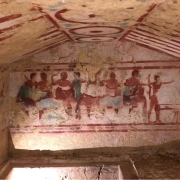
Rinaldone civilization was a neolitical culture between 3.700 – 2.100 BC. This civilization was located in the center of Italian Peninsula in Montefiascone area.
The foundation of the present inhabited center took place after the barbarian invasions. During the barbarian invasions, the populations run up on the hill in order to defend themselves.
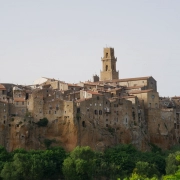
Montefiascone is the highest town in the province of Viterbo at an altitude of 590 m above sea level. The town is overlooking the beautiful lake Bolsena and the majority of the Viterbo part of Tuscia.
Fortress Roca dei Papi
Montefiascone has a strategic position to lake Bolsena. From the garden of the Fortress in Montefiascone you have a panoramic view to the Tirrenean Sea, the Maremma, the Umbrian mountains, the Cimini and the Tolfa mountains.
In Medieval times, on a preexisting structure, Pope Urban IV ordered the construction of the Fortress. Montefiascone became the Episcopal town for its constant faith to Church. It was the privileged residence for the popes in flight from Rome.
Between 1058 and 1500, more than 36 popes, emperors and other important historical figures have stayed in Montefiascone. Thanks to the popes, some of the greatest artists like Michelangelo, Bramante and Antonio da Sangallo the Young took part in the restructuring of the Fortress. In the Fortress you can admire the loggia designed and built by the famous architect Antonio si Sangallo the Younger. Inside the Fortress you can visit the museum dedicated to the life and work of Antonio Sangallo the Young.

The Basilica of Saint Flavian
The Basilica of St. Flavian built in the 11th century, is in Romanesque – Gothic style. It contains two churches, one placed on top of the other and facing in opposite directions. The Basilica has frescoes dating back to 14th and 16th century. A Renaissance loggia enriches the façade of the Basilica. The Popes appeared in the loggia to bless the crowd.
The Cathedral of Santa Margherita
From the Renaissance era, the Cathedral of Santa Margherita is a majestic edifice and one of the landmarks of the town.
The building of the Cathedral started around the end of the 15th century. The Cathedral remained uncovered till 1605 when the works were completed. The architect Carlo Fontana designed its magnificent dome, being the dome with the third biggest internal diameter cupola in Italy after St. Peter’s in Rome and Santa Maria del Fiore in Florence.
The architect Piacentino Paolo Gazola added the bell towers in 1840.
Inside the Cathedral you can admire precious sacred objects, 19th century paintings and a marble statue of Saint Margret.

Montefiascone Promenade and Beaches
Montefiascone has a long and beautiful promenade down to the lake Bolsena where you can admire the amazing view of the lake and you can enjoy an espresso, pizza, pasta and other typical dishes at the terraces.
Along the promenade you will discover wonderful beaches where you can enjoy bathing in the sun and swimming.