Bolsenatravel.com invites you to an Astronomical Event at the Astronomical Observatory of Monte Rufeno from Aquapendente. The Astronomical Event will take place between August 9th – August 14th 2025: Polvere di stelle – shooting stars.
https://bolsenatravel.com/wp-content/uploads/2025/07/PERSEIDI-2025-1-e1752328622691.jpg517776BolsenaTravelhttps://bolsenatravel.com/wp-content/uploads/2022/07/Bolsena-Lago-logo.pngBolsenaTravel2025-07-12 16:44:562025-07-12 16:57:18Bolsenatravel.com invites you to an Astronomical Event at Monte Rufeno
Bolsenatravel.com is happy to announce the start of Grancaro 2025 on July 12th at 17 o’clock in Golfo del Grancaro Cozza Caposavi, Bolsena at Bolsena Lake.
https://bolsenatravel.com/wp-content/uploads/2025/07/Grancaro.png7611239BolsenaTravelhttps://bolsenatravel.com/wp-content/uploads/2022/07/Bolsena-Lago-logo.pngBolsenaTravel2025-07-11 11:04:542025-07-11 11:05:26Grancaro 2025 starts on July 12th at Lake Bolsena
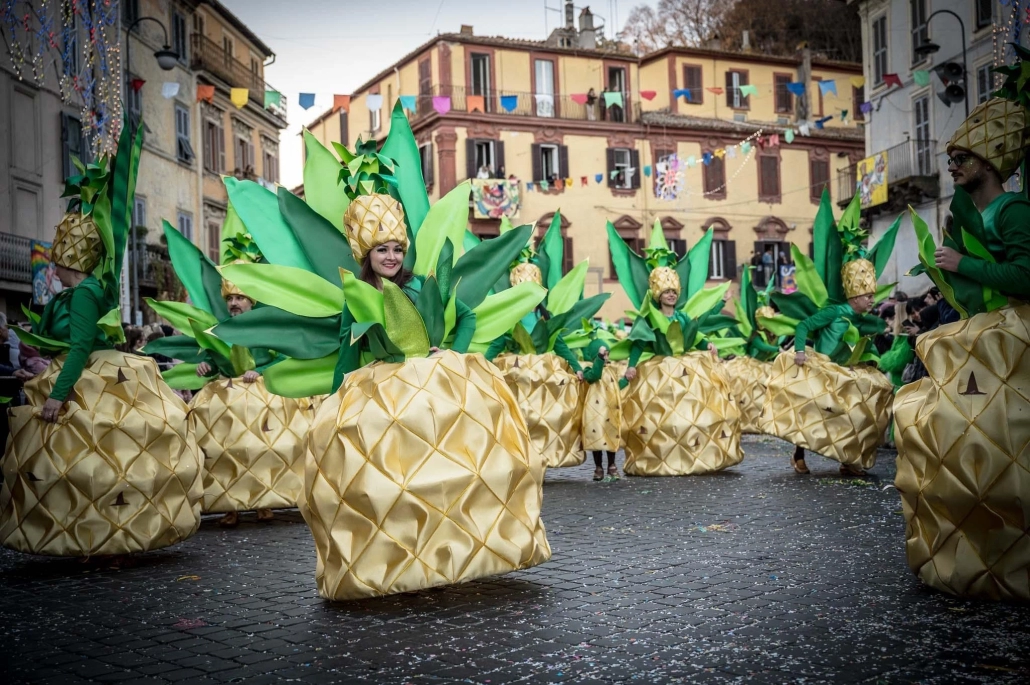
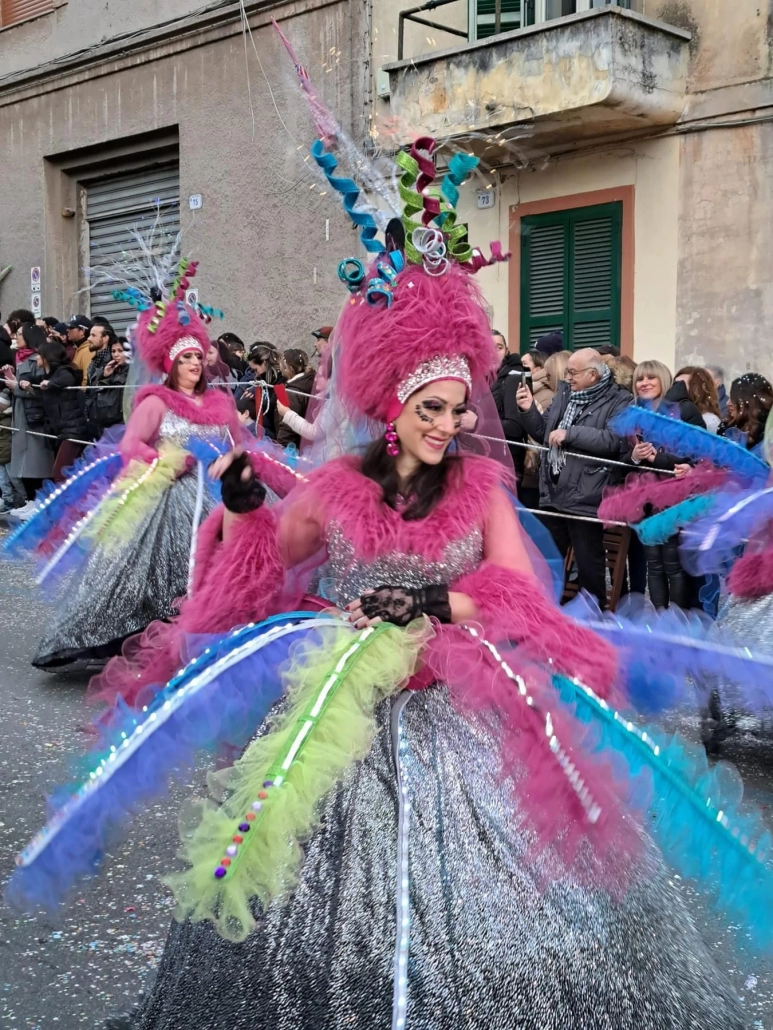
The Carnival în Ronciglione is one of the 10 most beautiful carnivals in Italy. Ronciglione is located in the province of Viterbo at 55 km from the capital city of Viterbo. The Carnival takes place every year here during end of January, middle of February.
As documented, the Carnival in Ronciglione originates from the Roman Renaissance and Baroque Carnival. It is celebrated here for over 130 years.
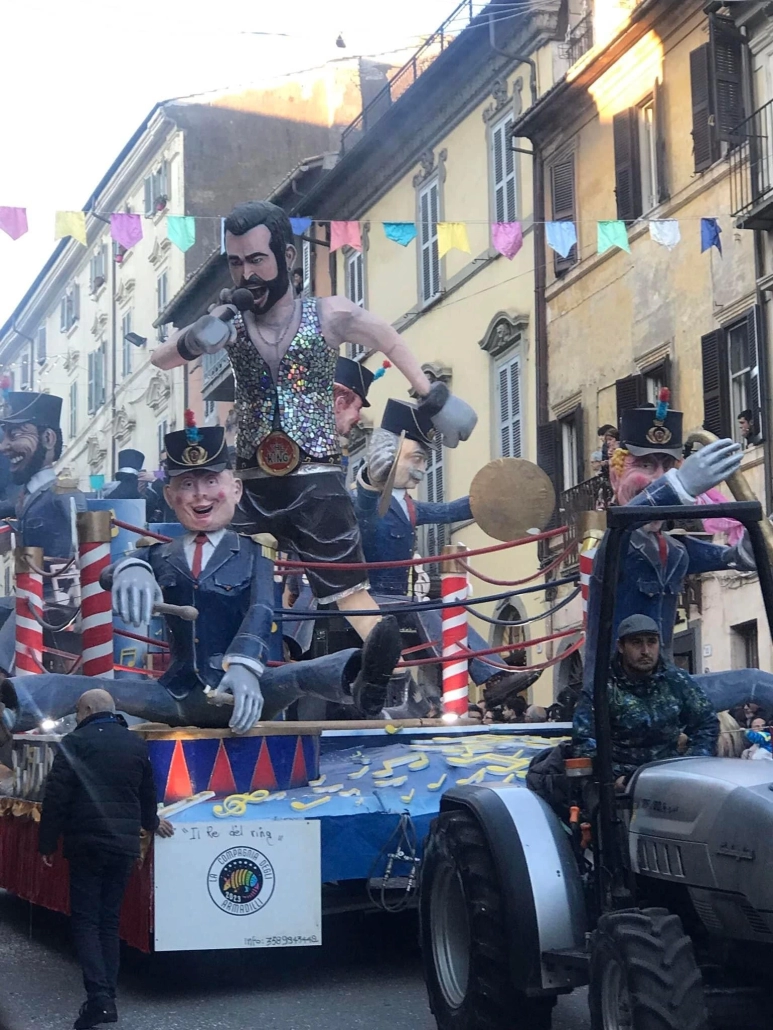
For almost one month the Carnival hosts parades of allegorical chariots, races, masquerades, street shows and gastronomic events.
During the Carnival you can assist to the Hussars Cavalcade, a horse race that remembers the love of a young French Hussars Capitan for a noble lady. How did he win her heart? The Capitan was frequently galloping on the streets of the town and was shouting his love for the lady.
Nowadays, the parade starts with a cavalcade of a group of horsemen dressed in costumes typical for the 19th century. The race of the Berbers is part of the entertainment during the Carnival and is a jokey-less horse race.
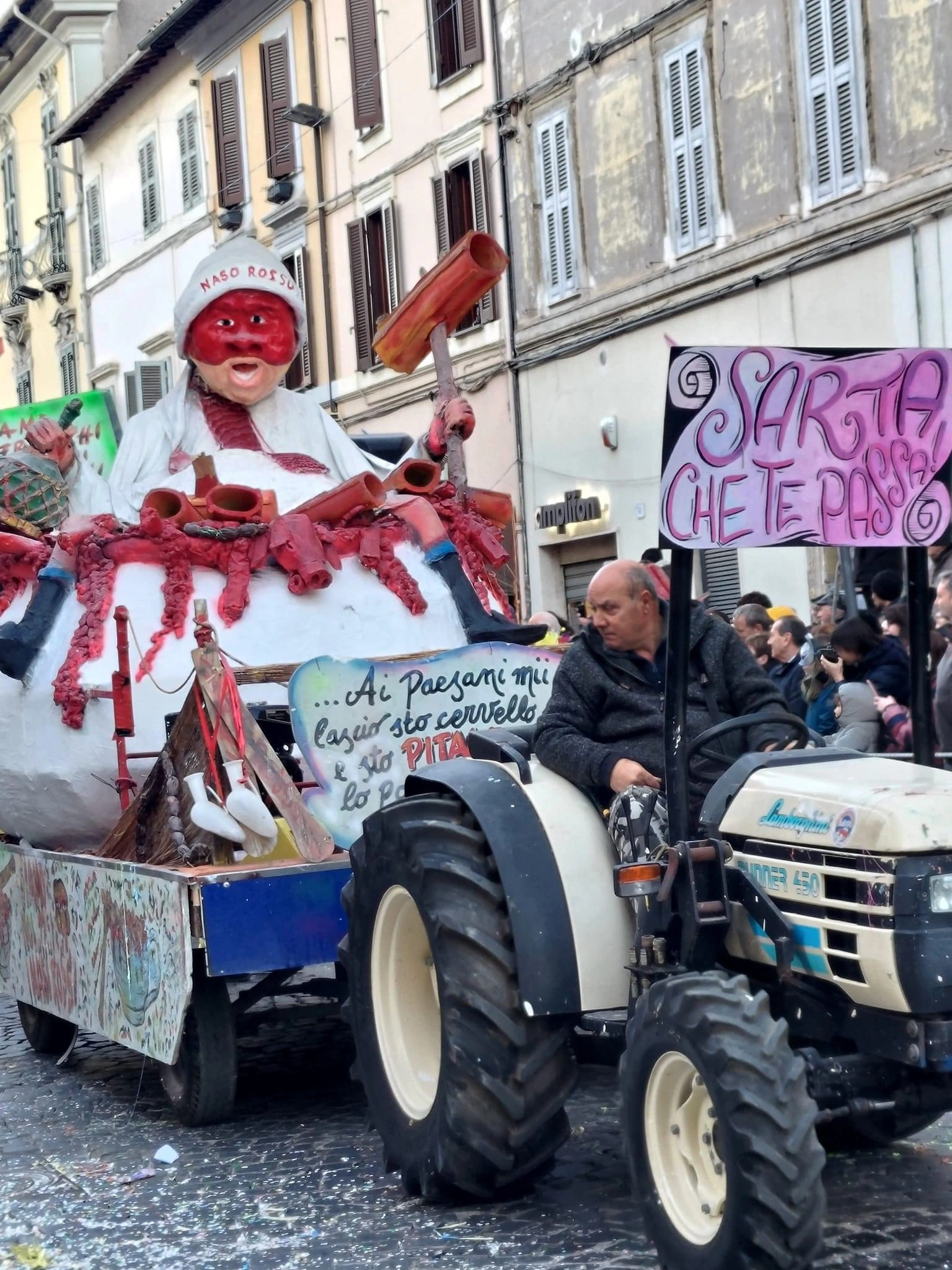
The ritual of the death of King Carnival and the parade and chariot of “Rose Noses” are elements from the Roman Renaissance and Baroque Carnival. Johann Wolfgang Goethe described them in his book: Travel to Italy.
The Carnival in Ronciglione presents every year a new and fascinating show that is entertaining and amazing!
SundayJanuary 28th,4th and 11th of February 2024 – Grandiose parade (the same program each Sunday).
11.00 – Opening of “Carnival Street Artist Show”
12.00 – Opening of the stand of typical and gastronomy products
15.00 – Parade and show of the local band of the town “Alceo Cantiani”.
15.30 – Hussars cavalcade
15.45 – Grandiose parade of the Gala: masquerades, allegorical chariots, masquerade groups and folcloric bands
We will wait for all of you in Piazza della Nave to dance the traditional Saltarello di Carnevale with the band “A. Cantiani”.
Thrusday, February 8th 2024 – The Fat Thursday
14.30 – The Carnival bell rings loud to announce the return of King Carnival.
15.00 – Begins the Carnival. The authorities of the town and Carnival give the keys of Ronciglione to the King of Carnival
15.30 – The historical parade of the Hussars
16.00 – Grand Carnevale of the children with spontaneous masquerades
17.00 – The fraternity of the Saint Bear offers snacks and wine to all the guests of the Carnival All the children receive food.
After that, everybody goes Piazza della Nave to dance the traditional Saltarello di Carnevale with the town band “A. Cantiani”.
Saturday February 10th 2024 – Saturday Ghiotto (Carnevale Jotto).
14.30 – The Carnival bell rings loud to announce the Carnival
15.00 – Piazza della Nave. Carnival Soap Box Race
16.30 – Piazza della Nave. Exhibit of decorated paper ballons
17.00 – Carnevale Jotto. Gastronomic afternoon with: Polentari, Tripparoli and degustation of pork and Porchetta.
17.30 – Piazza della Nave. Music Carnival. Music afternoon with live music.
Monday February 12th 2024 – Red Noses Monday
14.30 – The Carnival bell rings loud
16.30 – Parade of the traditional Chariot of the Red Noses
20.30 – Traditional Dinner of the “Red Noses Society”in the restaurant Due Cigni.
Tuesday February 13th 2024 – Shrove Tuesday
14.30 – The Carnival bell rings loud
15.30 – The historical Parade of the Hussars
16.00 – Grand Carnevale of the children with spontaneous masquerades
17.30 – Everybody in Piazza della Nave to dance the traditional Saltarello
18.30 – Representation of the death of King Carnival and the opening of his testament. The funerary corteggio of the dead King of Carnival.
19.30 – Departure of Kind Carnival with the aerostatic globe. After that everybody goes in Piazza della Nave to dance the traditional Saltarello di Carnevale with the band “A. Cantiani”.
https://bolsenatravel.com/wp-content/uploads/2024/02/Carnaval-Ronciglione-1.webp13632048BolsenaTravelhttps://bolsenatravel.com/wp-content/uploads/2022/07/Bolsena-Lago-logo.pngBolsenaTravel2024-02-10 14:55:372024-02-10 17:22:20The Carnival in Ronciglione, Lazio Region
Via Francigena is a historic pilgrimage route from Canterbury to France, Switzerland and Italy to the Holy city of Rome.
În medieval times Via Francigena was connecting Abbeys and Monasteries on the way to Rome.
Via Francigena is a scenic route that will take you through the picturesque hills of Tuscany. On the road you can admire amazing medieval towns very well preserved.
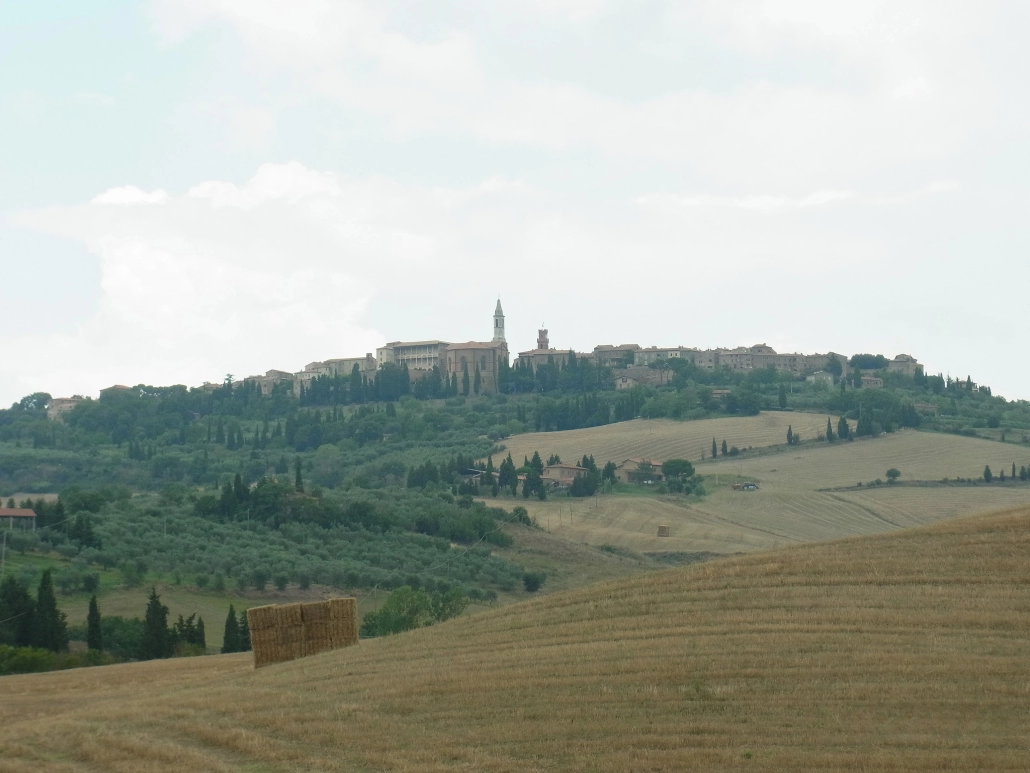
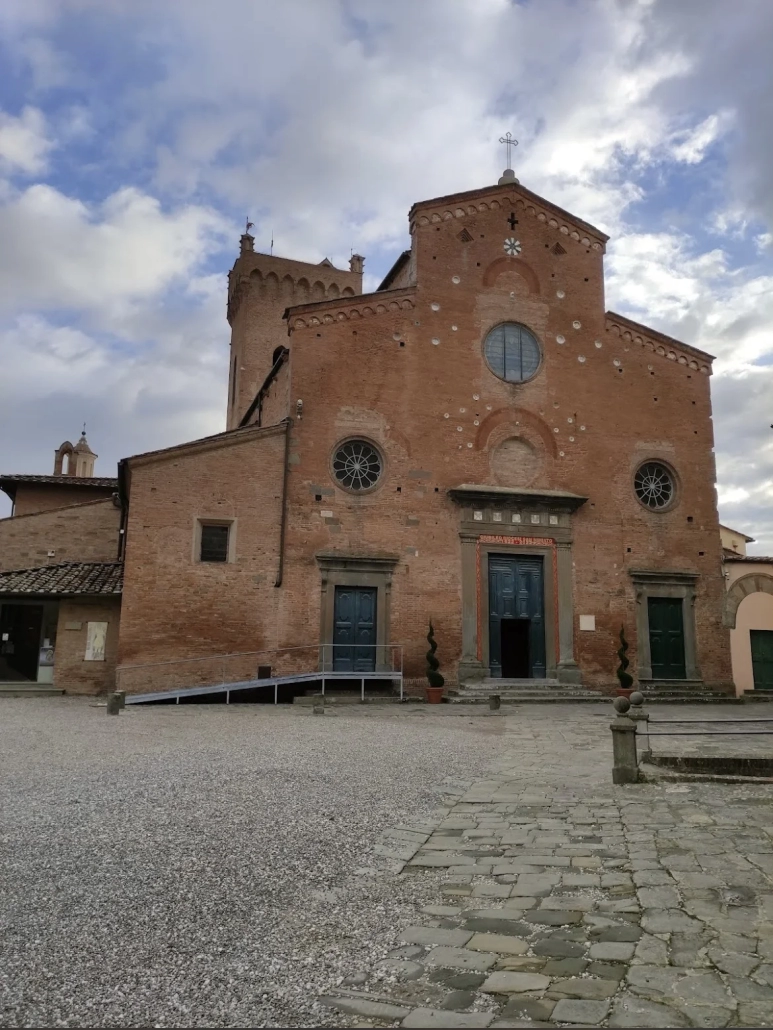
The famous places along the Via Francigena include such medieval cities as Lucca, San Gimignano, Siena, Pienza, San Miniato, and more.
On Via Francigena you can visit churches, monasteries, and other historical sites such as Acquapendente, Bolsena, Monte Fiascone and Viterbo. Other attractions include beautiful Italian countryside, vineyards, thermal baths, and charming little villages.
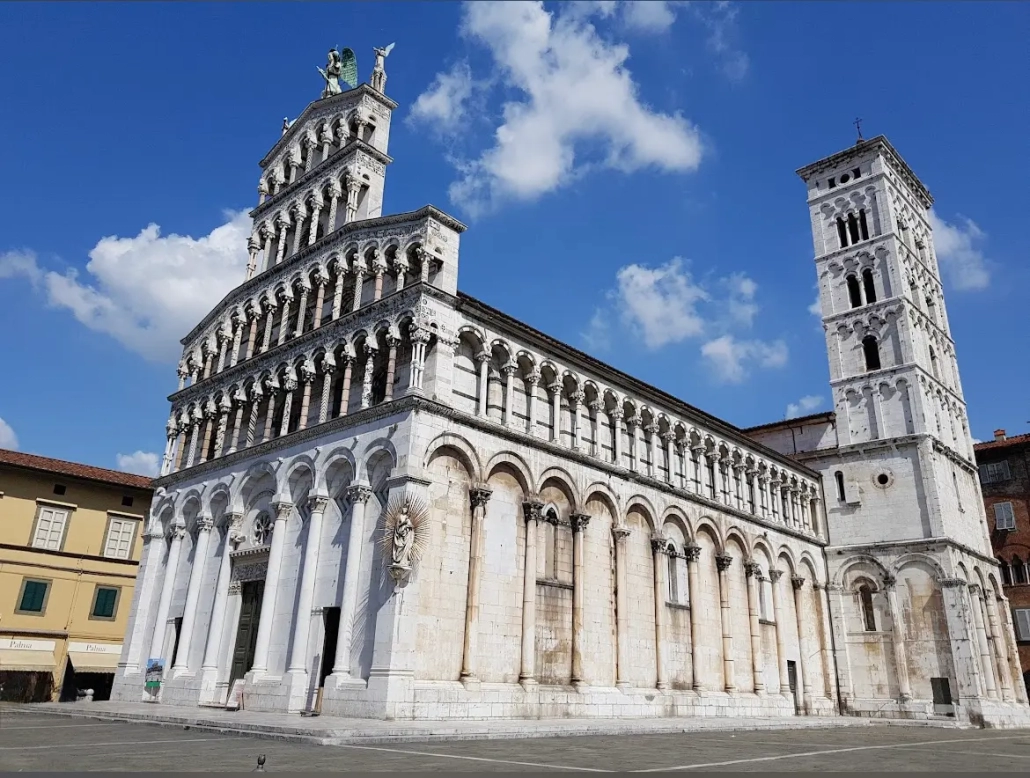
You can start your journey in Lucca and admire the 16th century Renaissance walls that surround the historic centre. The walls offer spectacular panoramic views over the city. Lucca is the city of Giacomo Puccini and the city of 100 churches. I recommend you to visit Giacomo Puccini museum in the house where he was born in the city centre.
In Lucca I recommend you to visit the church San Michele in Foro in the photo below.
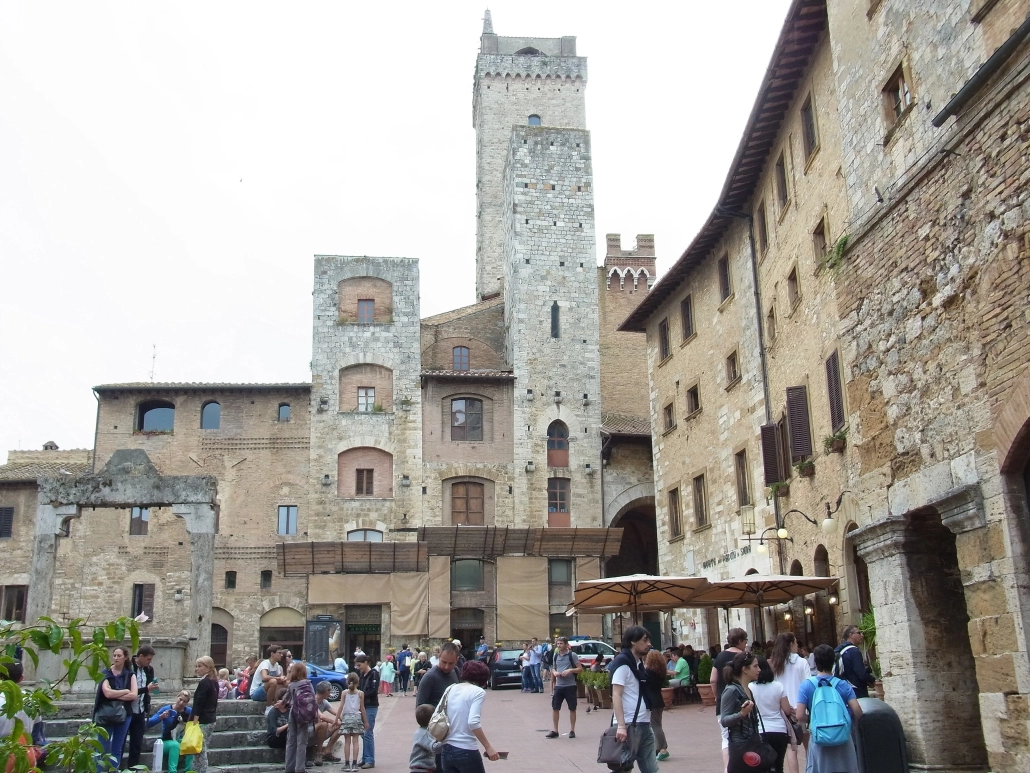
As you make your way through Via Francigena you will be surprised by the medieval towers of San Gimignano. This picturesque hill-town is home to ancient walls, fortified towers, and the Collegiate Church of Santa Maria Assunta. In San Gimignano, the noble families built 72 skyscrapers between 11th and 13th century. The skyscrapers were a symbol of their wealth and power. Many of the skyscrapers resisted till today and you can admire them from far away.
Via Francigena – the authentic way to know Tuscany
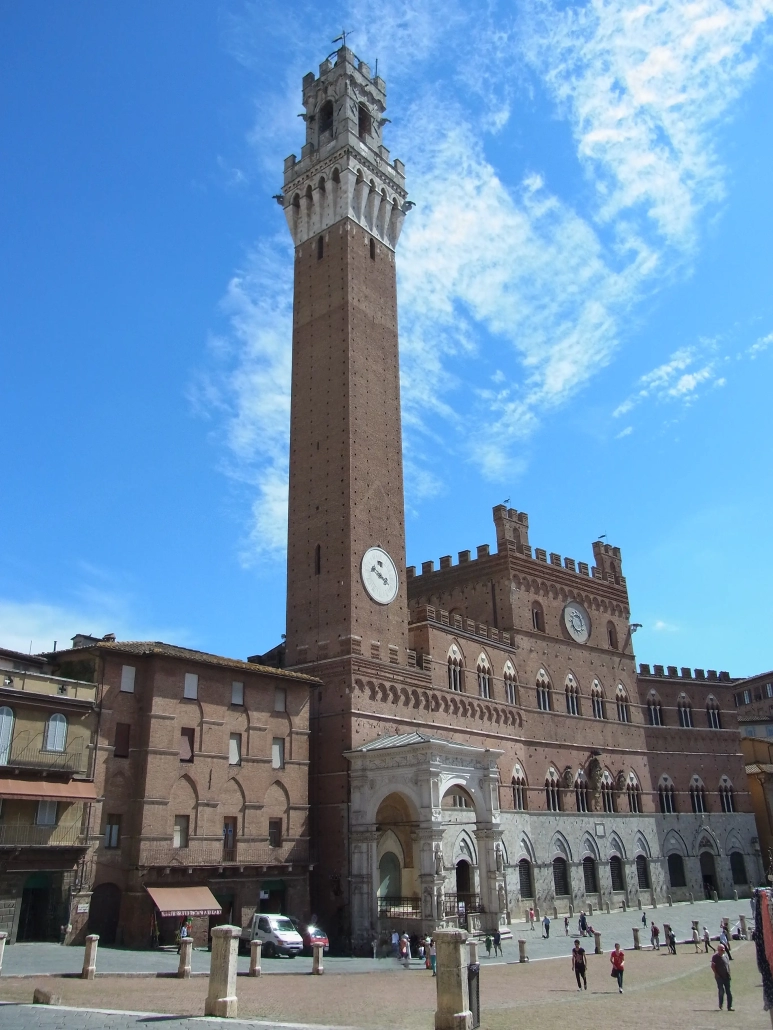
Siena is a beautiful medieval town boasting important historical attractions. Here you can admire the Palazzo Pubblico, Torre del Mangia, and the Cathedral of Santa Maria Assunta. In the beautiful Piazza of the Palazzo Pubblico you can attend the famous Palio (horses race) every year . The Palio is the event of each year in July and August that brings together many tourists and local people.
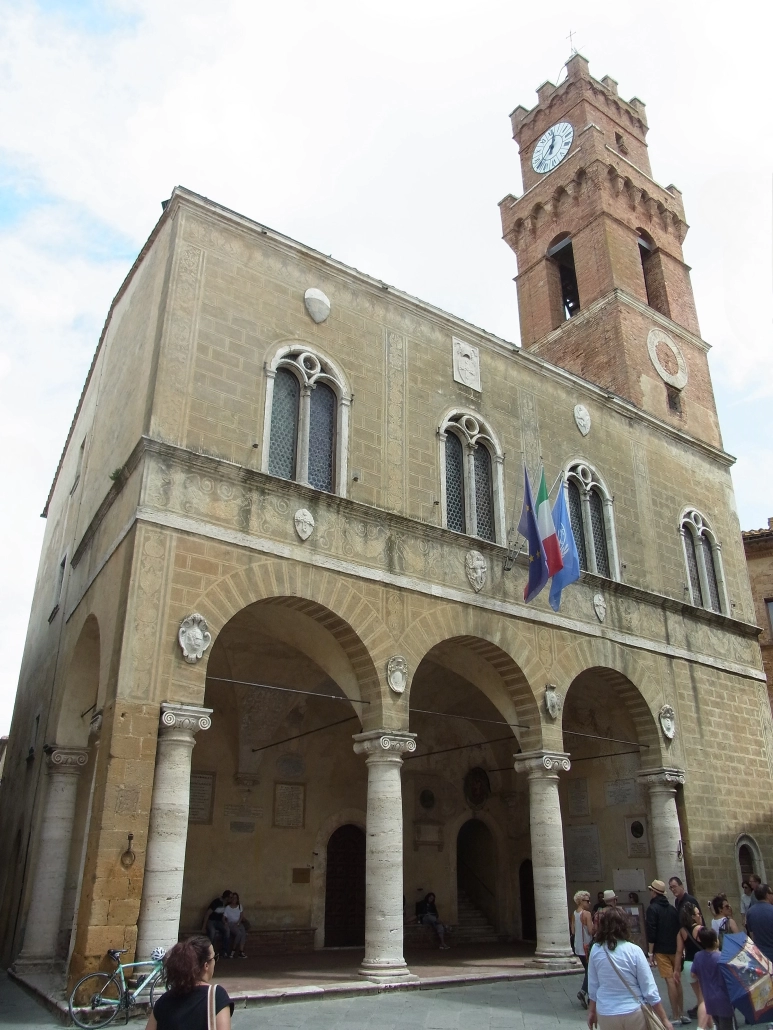
Pienza is a charming medieval town that offers visitors breathtaking views over Val d’Orcia. You can admire the view from its terraces and little streets high up on the hill.
In Pienza you can admire many attractions such as the Rocca, the Cathedral and the Palazzo Comunale.
Every street in Pienza will allure you with its little shops with typical food and vine and will surprise you with its medieval piazzas and churches.
Pienza has beautiful cosy restaurants where you can enjoy delicious pasta made from ancient recipes, pizza, Chianina steak (beef steak) accompanied by wonderful red wines of Val d’Orcia.
San Miniato is situated on a hill top and is famous for its stunning views and attractions. You can admire the St. Miniato al Monte Monastery and Palazzo Pretorio. This little town has a strategic view over the valley and is famous for leather working and truffle hunting. The dominant structure of the town is the Rocca, built between 1217 – 1223 to control the traffic in the area.
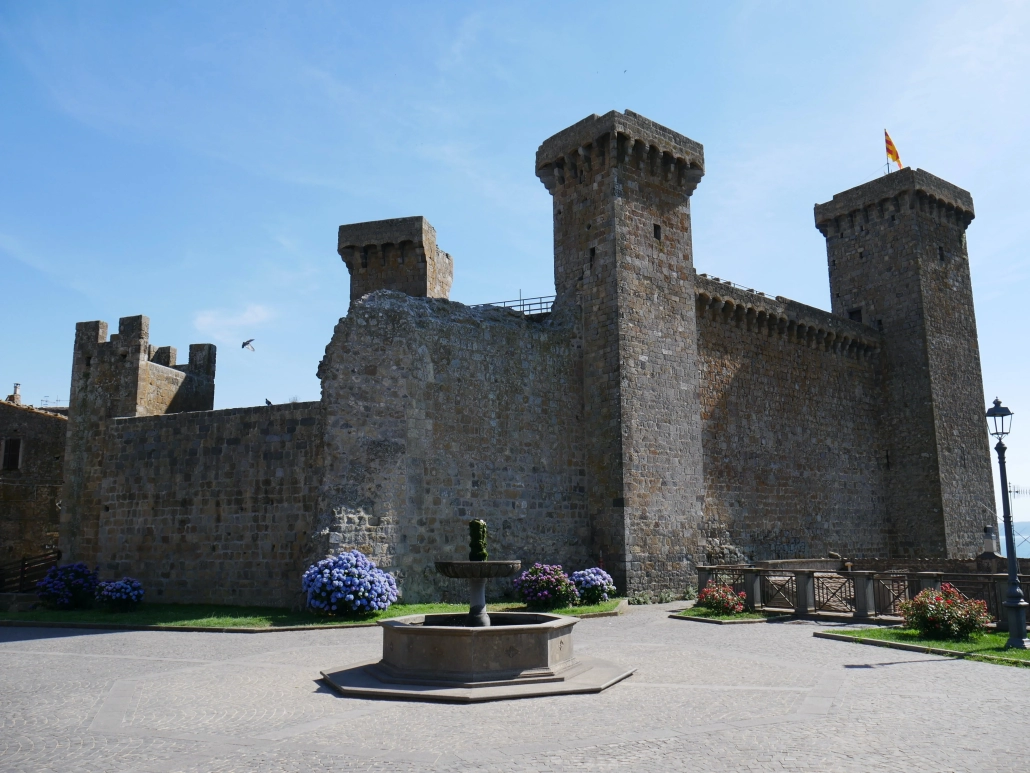
Bolsena town it is the enchanting medieval town on the shore of the amazing volcanic lake Bolsena. Right here, on the lake shore, Bolsena allures you with the beautiful green promenade that displays restaurants, cafes and Ice cream Kiosks. Elegant hotels will attract you to discover them and relax in their lavishing rooms.
Bolsena is the town of the Eucharistic Miracle
The walled city of Acquapendente offers plenty to explore such as the Sanctuary of Our Lady of Bondeno, the Ugarsoni Palace, and Porta Romana.
https://bolsenatravel.com/wp-content/uploads/2023/11/SanGimminiano-1-scaled.webp19202560BolsenaTravelhttps://bolsenatravel.com/wp-content/uploads/2022/07/Bolsena-Lago-logo.pngBolsenaTravel2023-11-23 19:39:032023-11-23 19:51:53Via Francigena – the authentic way to know Tuscany
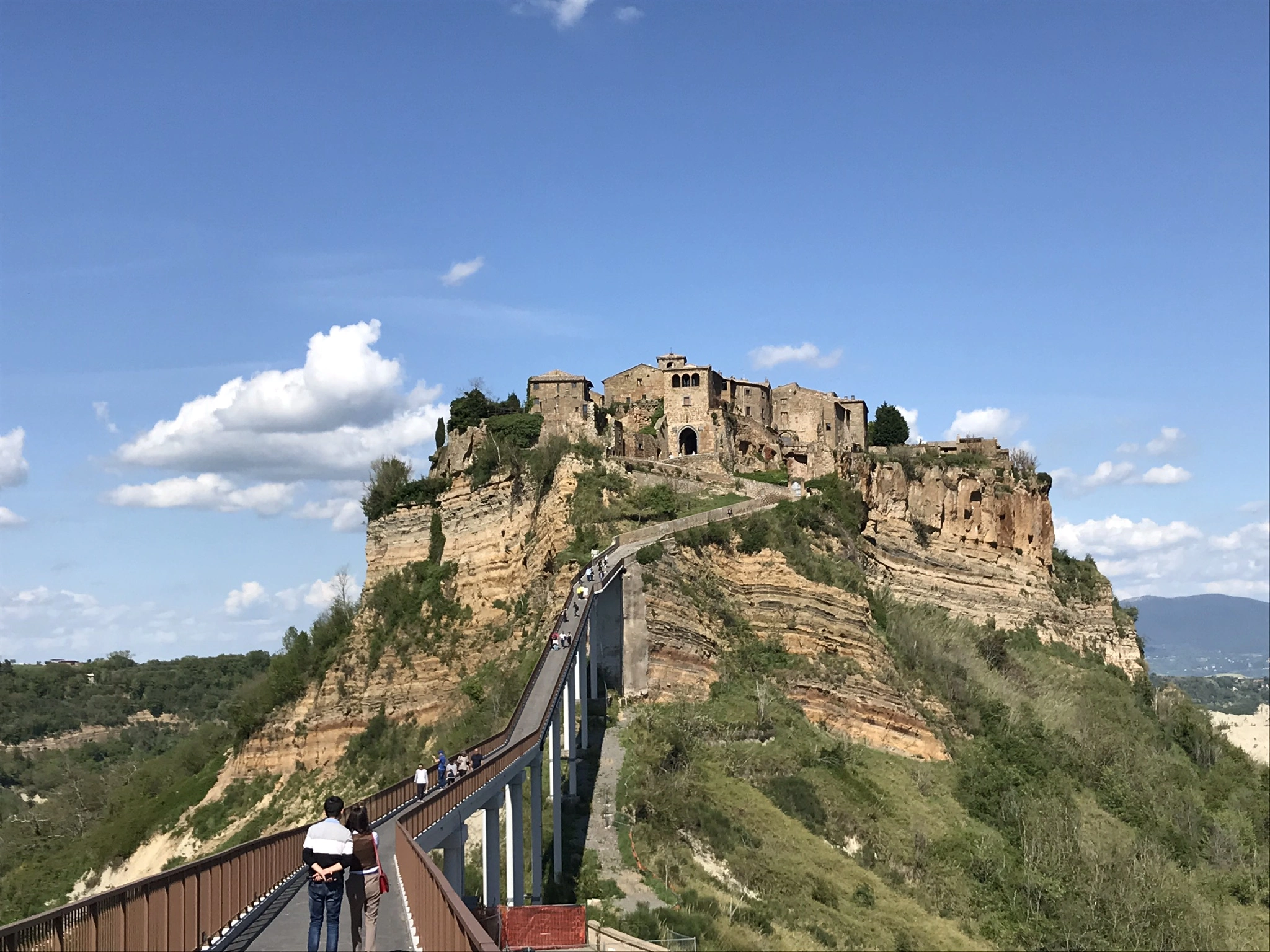
Civita di Bagnoregio – La città che muore/ the dying town is a magical place that you can admire from far away but you can accede only by foot, on the bridge that crosses the valley of the calanques to the entrance gate.
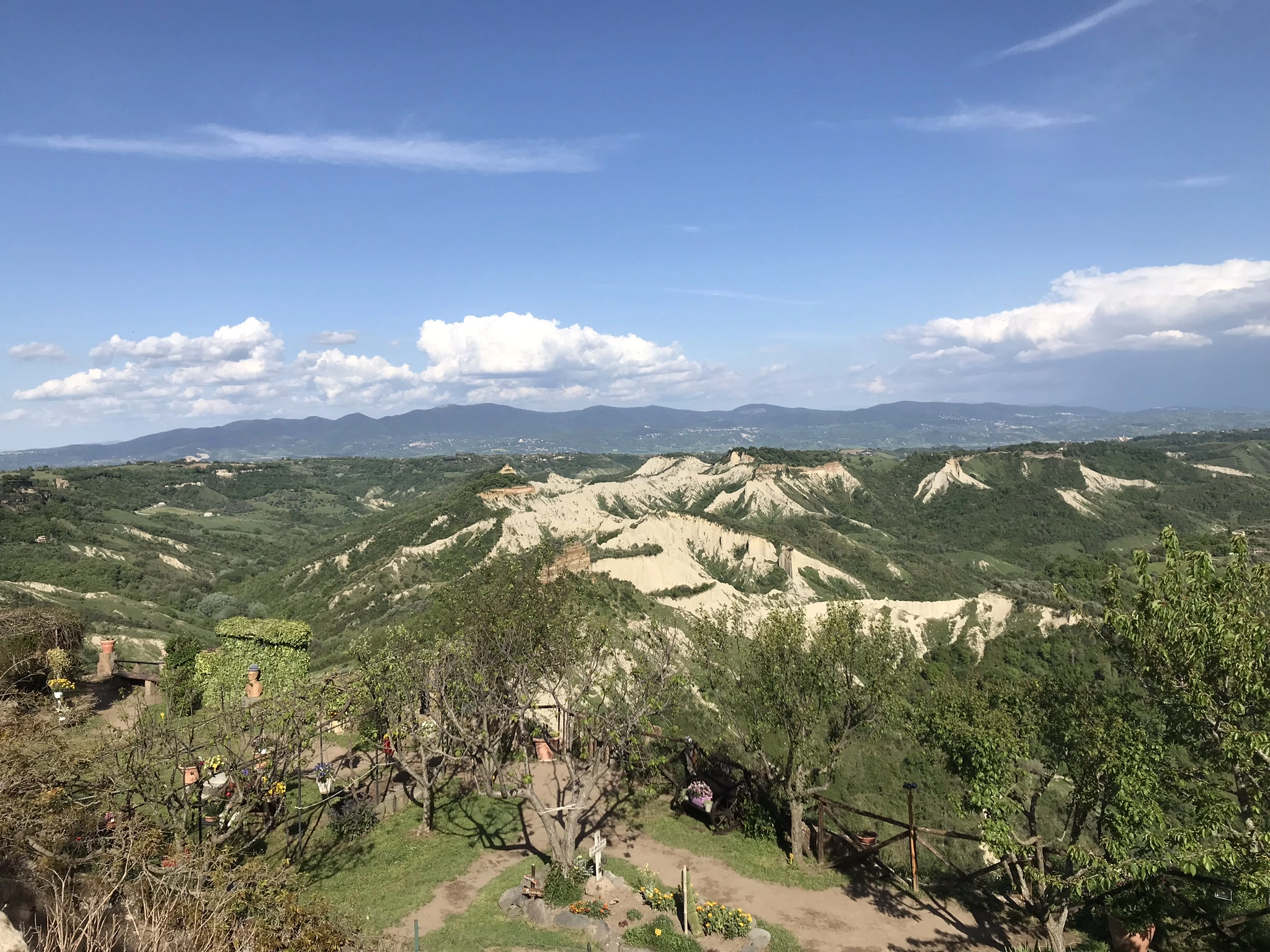
The calanques are hills of white clay without any vegetation, that suffer continuous erosion due to the two rivers that pass by and to the atmosferic conditions.
Civita di Bagnoregio is a masterpiece of history and art, secluded from the world by the clay valley below in continuous erosion.
Students from art and history universities across Italy visit Civita to study the hidden gems of this amazing town.
Civita di Bagnoregio is collapsing bit by bit into the void of the calanques valley below since hundreds of years.
You should hurry to admire this jewelry as is still standing and alluring us with its unique beauty and mystery!
Civita di Bagnoregio panoramic view
Civita di Bagnoregio has Etruscan origins
The Etruscans found Civita di Bagnoregio 2500 ago. The Etruscan settlement had defensive walls with five gateways. Only one gateway remained till today: Porta di Santa Maria decorated with Etruscan-Roman symbols.
The original Etruscan gate still exists and is one meter away from the facade. When you enter you can notice the Etruscan arches above and the original walls built using the opus quadratum technique. This ancient technique was using large blocks of stone placed one on top of the other without cement. They are standing due to their own weight.
From Porta di Santa Maria we follow a street that is an ancient decumanus. Both the Etruscans and the Romans had precise rituals when they were founding a city. They chose the site of the city and drew the perimeter along with two perpendicular roads forming a cross. The perpendicular roads were: the cardo in north-south direction and the decumano from east to west. The point where the two roads intersected was the sacred centre of the city. In the sacred centre were the public buildings and the businesses were made. The sacred centre of Civita is in Piazza San Donato.
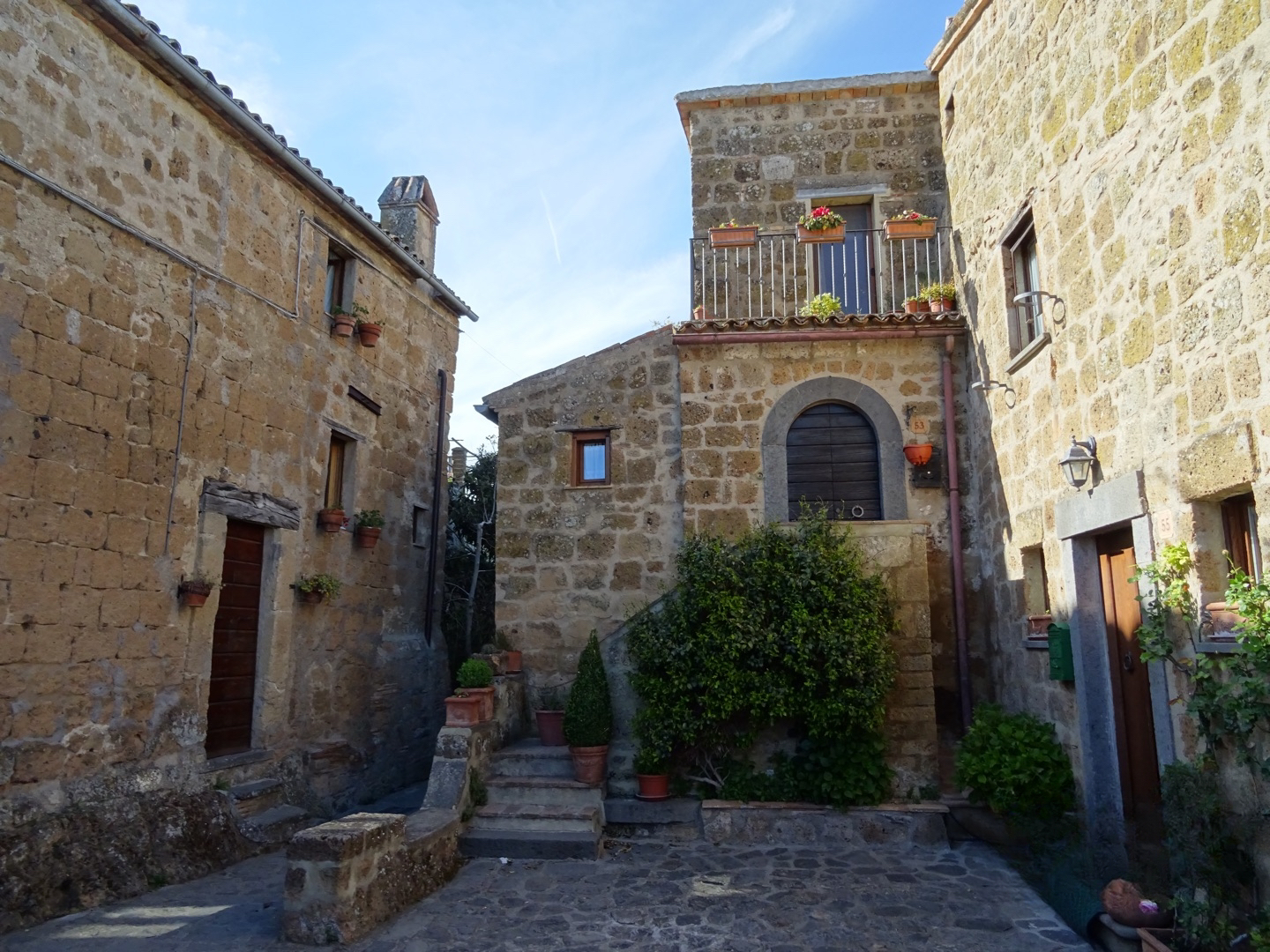
Civita di Bagnoregio street view
Piazza Colesanti
The ancient decumanus takes us to Piazza Colesanti. Here we can admire the residence of Colesanti Family, one of the oldest and most important families in Civita. The residence has crumbled on several occasions and now some of the windows look over the void space in the valley of the calanques.
As we walk along the decumanus, we reach the main square of the town: Piazza San Donato.
Piazza San Donato
În Piazza San Donato, on the right side, we can visit the most interesting Geological and Landslide Museum inside the noble Alemanni residence. On the left side we can admire the building of the Town Hall established here in 1448. The Town Hall was transferred to Bagnoregio after the terrible earthquake in 1695. On the opposite side of the piazza we can admire the Church of Saint Donato, formerly cathedral, now a simple parish church. The Bishop’s seat was transferred to Bagnoregio. The Church was built in Romanesque style and was rebuilt in 1500. The tympanum is decorated with a ceramic image of Saint Donato.
San Donato Church
When you enter the church, on the right side, you can see a small marble urn with a painting of Saint Victoria. Saint Victoria was martyred in 251 by the Romans under Emperor Decius.
https://bolsenatravel.com/wp-content/uploads/2023/03/IMG_0738.webp15362048BolsenaTravelhttps://bolsenatravel.com/wp-content/uploads/2022/07/Bolsena-Lago-logo.pngBolsenaTravel2023-03-05 14:23:202023-04-27 12:32:02Civita di Bagnoregio – La città che muore
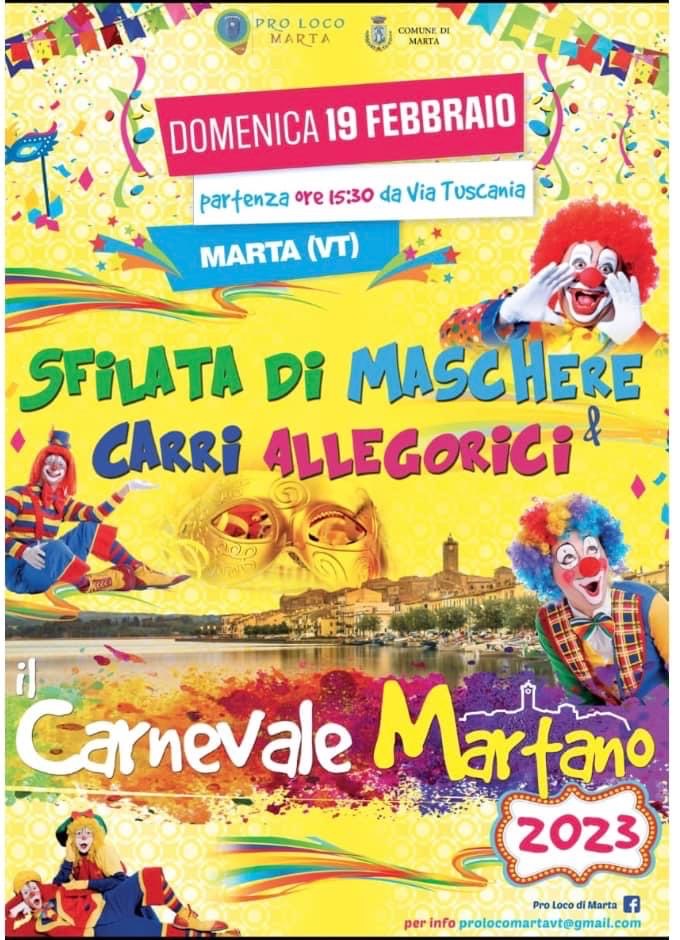
The Carnaval in Marta is a tradition that takes place every year in February. The Carnaval in Marta starts later then other Carnavals in Italy for a reason that dates back in time.
In 1703, on February 2nd, a strong earthquake shook this region and the whole Italy. After the earthquake, the people of Marta in sign of gratitude and humility to the Madonna and the protector Saints decided to postpone the date of the Carnaval from January to February. Since then, the Carnaval in Marta starts on February 19th while in the other cities starts on January 17th.
In Marta la Festa di San Biaggio takes place every year on February 3rd with a procession of the San Biaggio through the streets of Marta. San Biaggio and Santa Marta are both patrons of the town of Marta. After the Festa di San Biaggio, will start the Carnaval on February 19th.
The Carnaval will start with the departure of the allegorical chariots at 15:30, in Via Tuscania.
You can admire the parade of allegorical chariots with characters in costumes with masks and listen to the music.
The Carnaval in Marta is a tradition that takes place every year due to the dedication and organization of Pro Loco Marta
Pro Loco Marta revived this old lost tradition and organizes the Carnaval every year together with the Municipality of Marta.
In the past years the Carnaval in Marta had an enormous success. Many people from neighboring towns and villages participate to the Carnaval or just enjoy the parade of the chariots in a burst of joy.
Come and be a part of this amazing event full of positive energy!
The Carnaval în Marta
https://bolsenatravel.com/wp-content/uploads/2023/02/mask-1155808-scaled.webp17072560BolsenaTravelhttps://bolsenatravel.com/wp-content/uploads/2022/07/Bolsena-Lago-logo.pngBolsenaTravel2023-02-06 12:55:262023-04-27 12:32:53The Carnaval in Marta is a tradition
Bolsena lake has an amazing clear blue water and is surrounded by beautiful natural beaches with volcanic grey sand. Here you can relax, have fun and swim all day long.
https://bolsenatravel.com/wp-content/uploads/2022/09/Capodimonte-Beach.webp6161095BolsenaTravelhttps://bolsenatravel.com/wp-content/uploads/2022/07/Bolsena-Lago-logo.pngBolsenaTravel2022-09-21 19:11:352022-11-10 13:52:57Beaches around lake Bolsena
Discover the mysterious Christian history in Bolsena region that can be traced back in Roman times. Emperor Diocletian martyrized the Christian believers in the beginning of IV century.
https://bolsenatravel.com/wp-content/uploads/2022/09/Discover-the-mysterious-Christian-history-in-Bolsena-region-03-scaled.webp25601440BolsenaTravelhttps://bolsenatravel.com/wp-content/uploads/2022/07/Bolsena-Lago-logo.pngBolsenaTravel2022-09-21 12:46:462022-11-10 14:44:24Discover the mysterious Christian history in Bolsena region
Ristorante L’Oasi Del Pescatore is a charming family restaurant situated on a small rocky beach of lake Bolsena. You can enjoy a romantic lunch or dinner on the lake shore and admire the lake view and Bisentina island.
At Bolsena lake you and your family can enjoy a wonderful and memorable stay and you can take advantage of the numerous leisure opportunities in the region.
https://bolsenatravel.com/wp-content/uploads/2022/10/Leisure-at-Bolsena-lake-img001.webp708945BolsenaTravelhttps://bolsenatravel.com/wp-content/uploads/2022/07/Bolsena-Lago-logo.pngBolsenaTravel2022-09-21 11:31:392022-11-15 14:07:57Leisure at Bolsena lake