Capodimonte Medieval Town and Bisentina Island at Lake Bolsena
Capodimonte Medieval Town and Bisentina Island are two landmarks of Bolsena Lake.
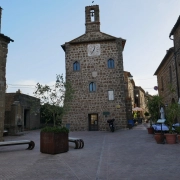
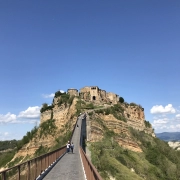
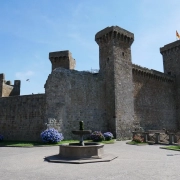
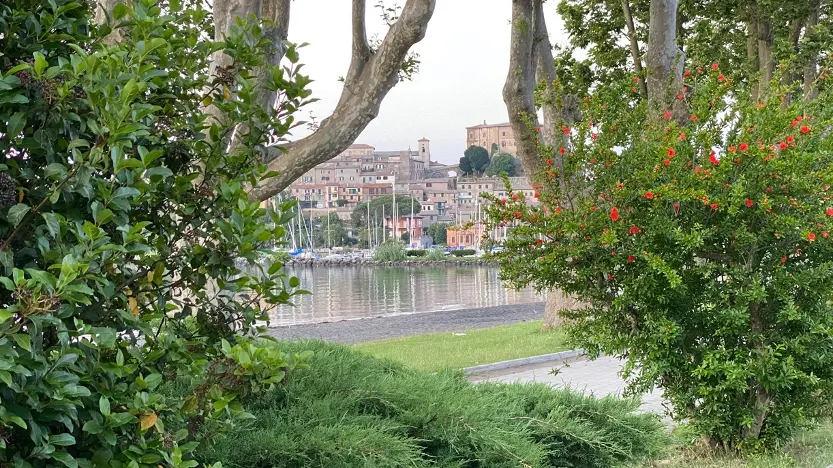
The Medieval Town of Capodimonte is an ancient town that rises on the southern shore of Bolsena lake, around the Rocca Farnese Fortress.
Capodimonte has Etruscan origins
Capodimonte’s origins date back to the Etruscan town of Vesentum. The Etruscan necropolis of Vesentum revealed artefacts from different periods of time. The artefacts were from: Neolithic, Villanovan, Etruscan and Roman periods.
In 280 AC, after the destruction of Vesentum, the Romans established the town with the name Visentium that became a flourishing Roman Municipium.
The Longobards destroyed the Roman town and the population left the original settlements and took refuge on the surrounding hills.
Capodimonte became a parish in 1102. In 1254 begun the construction of a fortified castle on top of the hill of Capodimonte.
In 1269 Pope Boniface VIII made Capodimonte the Church property.
Farnese family ruled Capodimonte for a long period and constructed the Rocca (Fortress) of Capodimonte in octagonal shape in the XV th century. The famous architect of Farnese family, Antonio da Sangallo the Young, restructured the Rocca between 1510-1513.
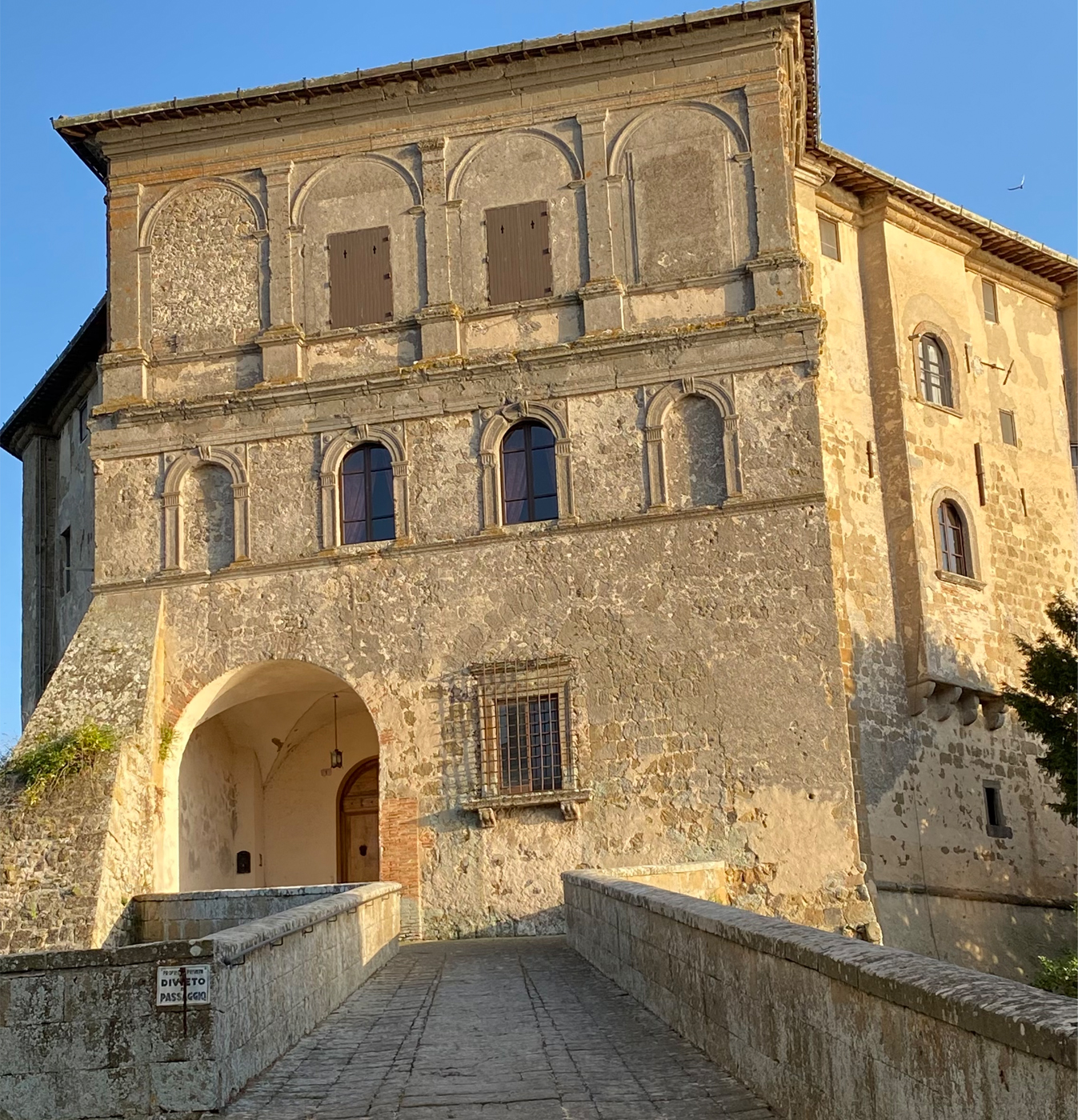
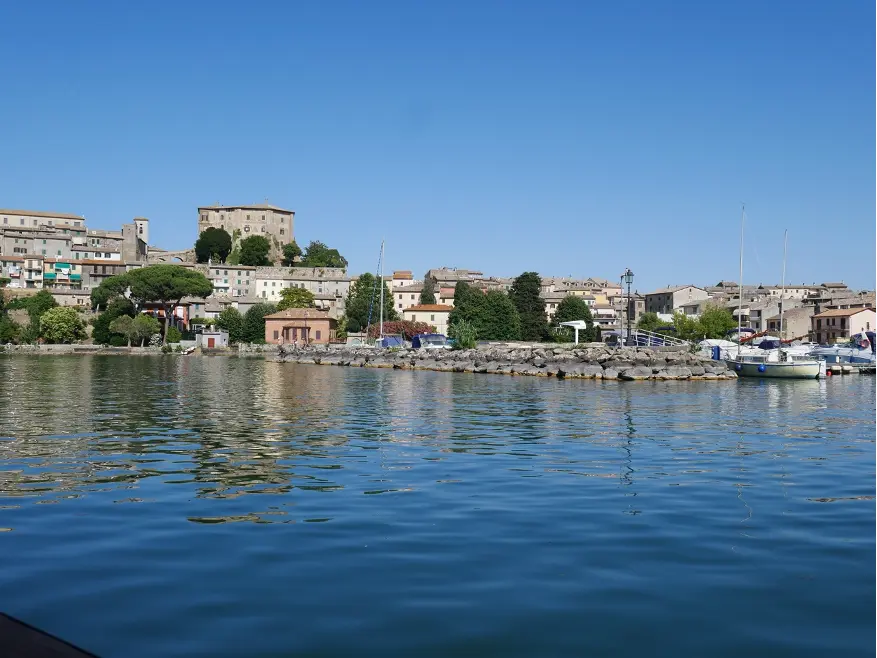
In 1537 Capodimonte entered the Dukedom of Castro established by Pope Paul III Farnese for his son Pier Luigi. Capodimonte came under the control of the Church after the destruction of the Dukedom of Castro in 1649.
Bisentina Island
The pearl of lake Bolsena, Bisentina Island belongs to the territory of Capodimonte. The eruption of the volcano in Bolsena lake formed the flat part of the island. The two hills, the Monte Tabor in the north and the Rocchina in the south are the remains of the volcano crater.
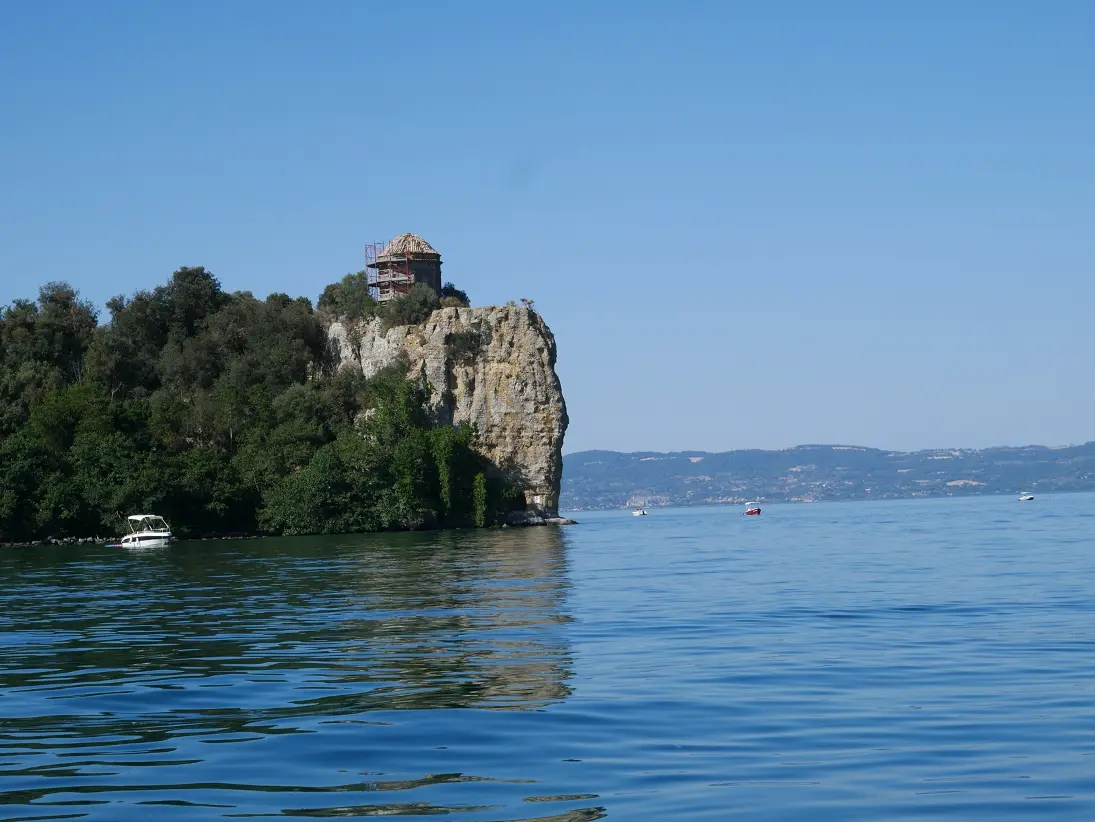
The stable settlement of the island begun in the 9th century. The population of the lake’s coasts took refuge on the island to escape the barbarian invasions. In 1200 Aldobrandeschi family controlled the island. After Aldobrandeschi period, the Pope Urban IV annexed the island to the Church. He appointed the island the papal summer residence. The island remained the papal summer residence till 1758.
Pope Urban IV ordered the carving in tufa stone of the terrifying prison Malta Dei Papi in the underground of Monte Tabor. The only way to reach the prison was through a pit 30m deep and a narrow tunnel.
In Malta Dei Papi went the ecclesiastics who committed crimes or were guilty of heresy. They faced the enprisonment for life.
Farnese family ruled Bisentina island between 1300-1652. Bisentina island went through a period of development and splendor under the rule of Farnese family. When the Farnese family power ended the island went into a period of decline.
In 1912 the island started to return to its old splendor with the restorations of monuments and frescoes.
Chapels on Bisentina Island
On Bisentina Island hosts 7 Chapels built between XV-XIV century.
The names of the 7 chapels are, from the north side of the island clockwise, as follows:
- San Francesco, the oldest chapel
- Monte Oliveto
- Monte Tabor or the Transfiguration chapel, where you can admire frescoes of Popes Pio I and II and a Christ transfiguration with the disciples Peter, John, James and Moses with Eliah
- San Gregorio
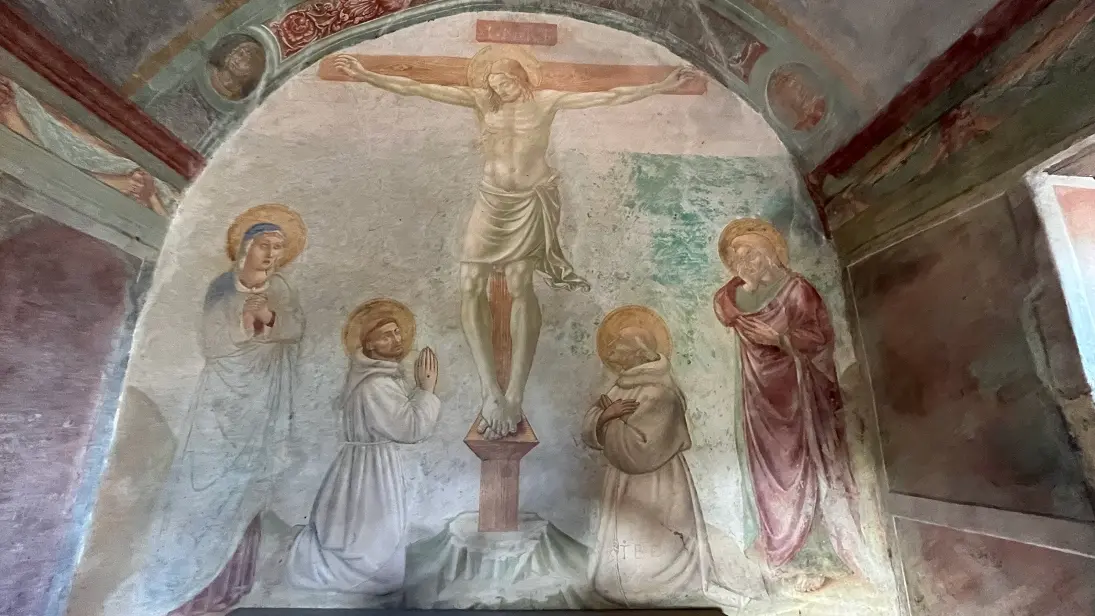
- Monte Calvario or Of the Cross, that was restructured at the initiative of the Princess Maria Angelica del Drago. On the back wall of the chapel there is a fresco from year 400 A.C. representing Christ on the Cross flanked by Saint Francesco and Saint Bernardino, the Virgin Mary and Saint John the Evangelist. Above the entrance of the chapel is painted Christ in the tomb and on the lateral walls are painted the doctors of the Church: Gerome, Augustine, Gregory and Ambroze. On the ceiling is painted Christ blessing with Lucas, Mathew, Mark and John. The frescoes in the chapel are attributed to the school of Benozzo Gozzoli.
- Santa Caterina also named “La Rocchina”, the only one in octagonal shape, where can be recognized the work of Antonio da Sangallo the Young. This chapel is called “La Rocchina” because it reproduces in small size, the dimensions the Rocca di Capodimonte.
- Santa Concordia that has no ornaments or paintings
The Church of Saint James and Saint Christopher on Bolsena Island
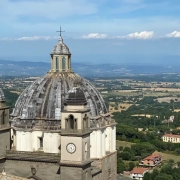
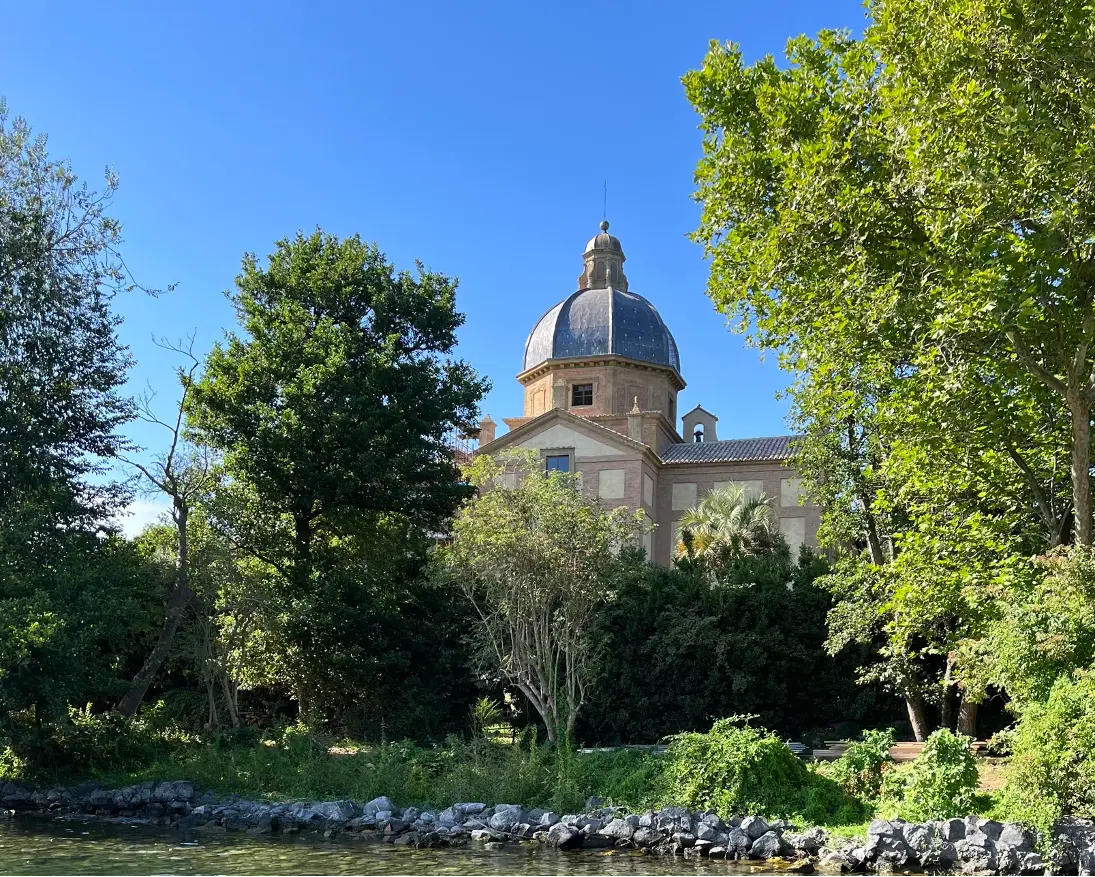
The Church of Saint James and Saint Christopher is the most important monument on the island. The building of the Church started in 1500. Vignola made the great cupola of the magnificent Church. Near the Church there is a Franciscan Convent of the Order of Friars Minor.
Capodimonte Medieval Town and Bisentina Island are the gems of Bolsena lake. Capodimonte is famous for its beautiful 6 km long beach.