
Bolsenatravel.com is your guide to Sicily
Bolsenatravel.com is your guide to Sicily this summer. Follow us to discover the beautiful and ancient city of Palermo.
Bolsenatravel.com is in Palermo is your guide to discover this amazing city and its unique monuments, palaces and churches.
Bolsenatravel.com is your guide to Sicily
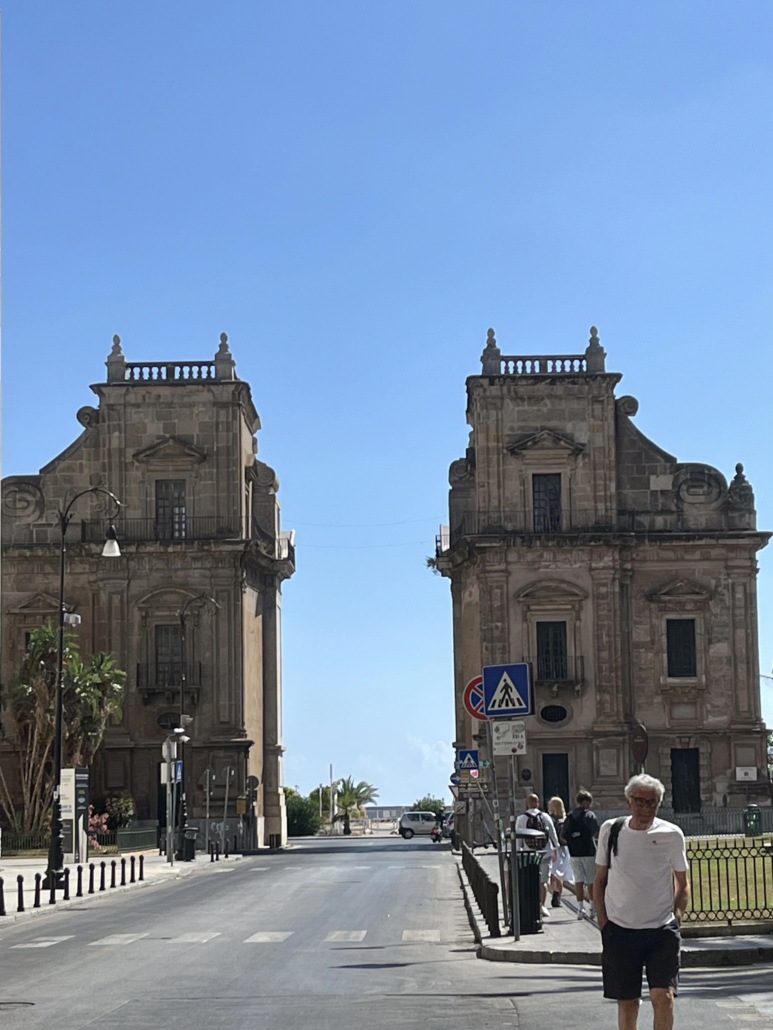
We will start our journey from Porta Felice on Via Vittorio Emanuele to discover the palaces, monuments and churches of Palermo that date back to year 1100 AD.
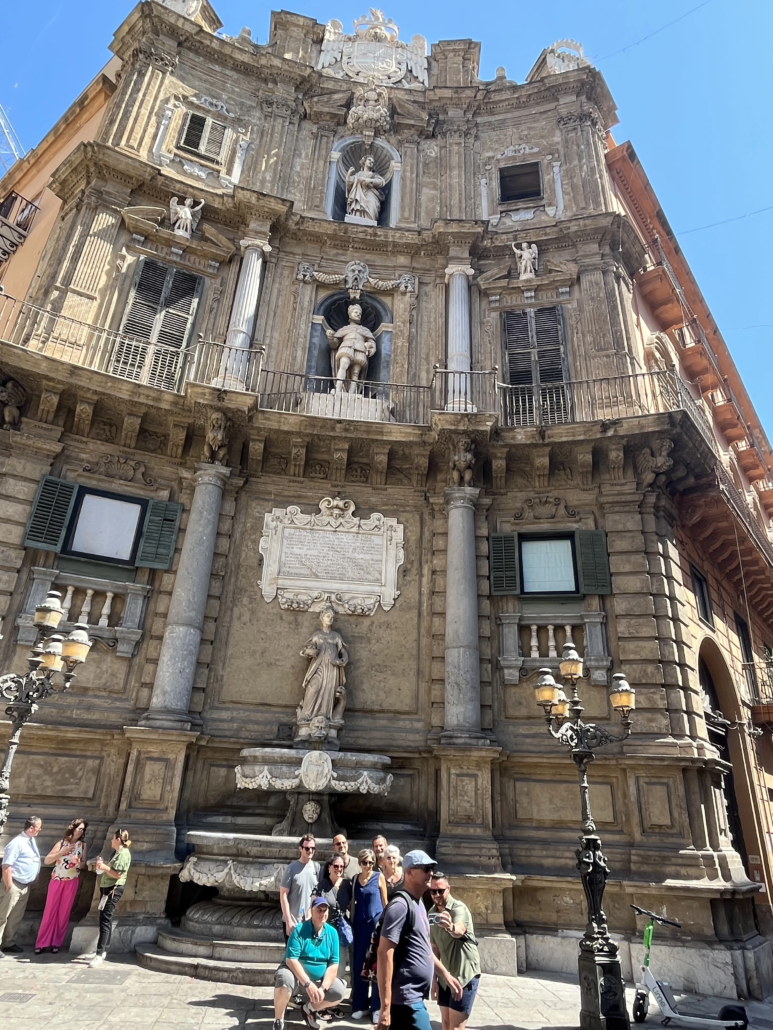
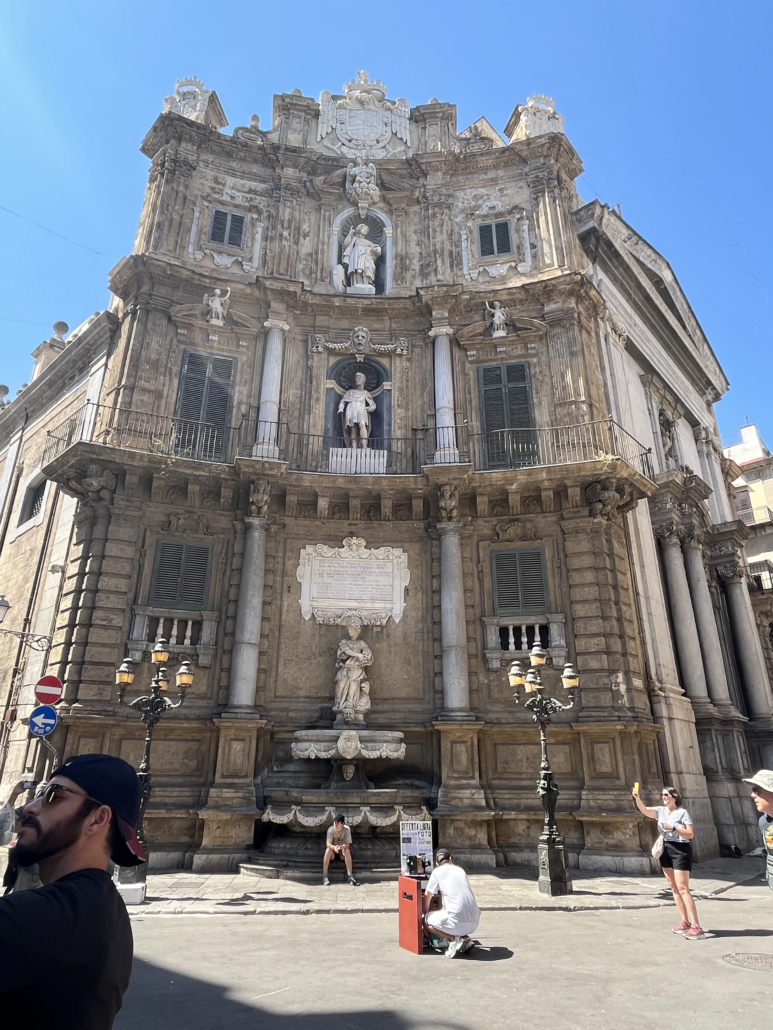
Quattro Canti
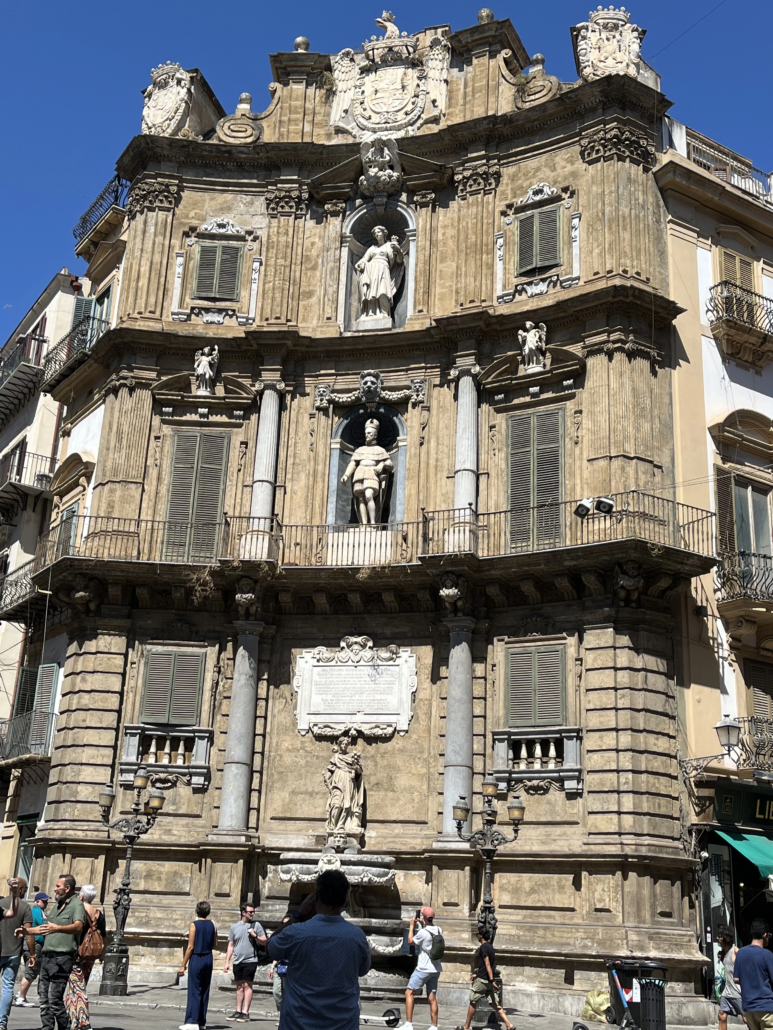
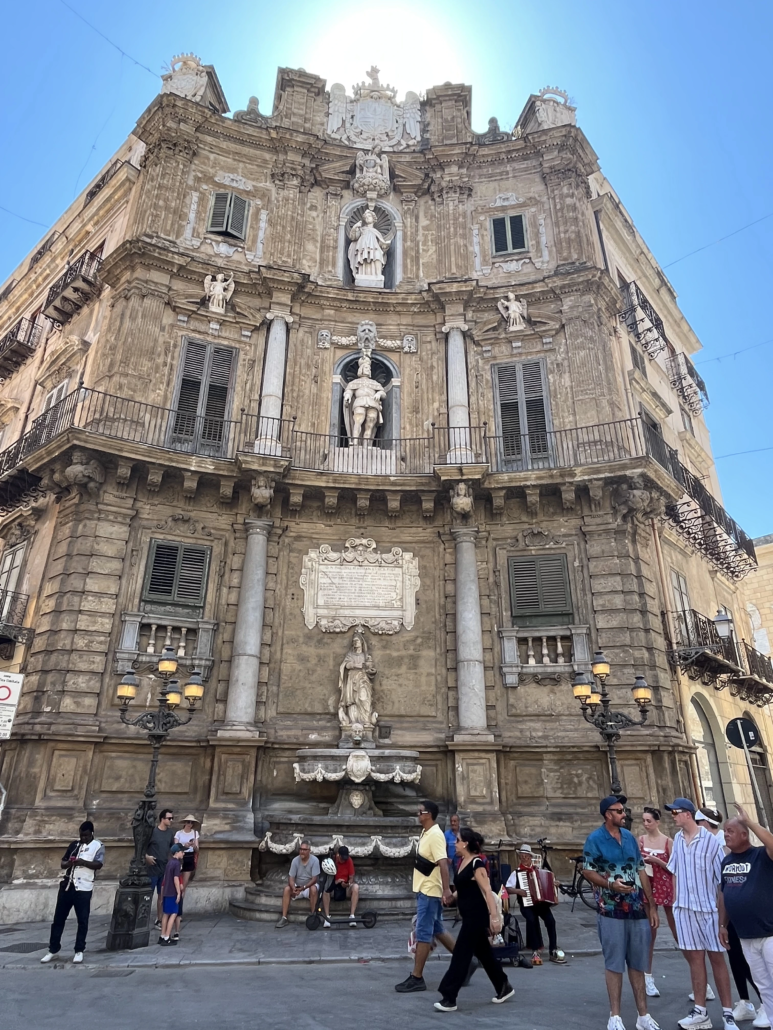
On our way we will stop and admire Quattro Canti, the most somptuous crossroads created in Europe in the 17th century. The four imposing architectural facades called Theater of the Sun impress us with their beautiful architecture. At any time of the day one of the four corners is lit up by the sun light.
Each facade is adorned with beautiful sculptures. On the lower level is one sculpture of the four Seasons, in the middle is the statue of a Sovereign and on the upper level is the Patron Saint of the district. At the top is an imperial eagle with the coats of arms of the Spanish Kingdom, the city and the viceroys.
Pretoria Fountain
As we continue our walk from Quattro Canti, on the left side we notice a beautiful fountain called Pretoria Fountain in front of the Town Hall. The fountain has a circular shape with concentric basins on three levels that culminate in the central fountain. Beautiful statues representing pagan deities and animals adorn the fountain.
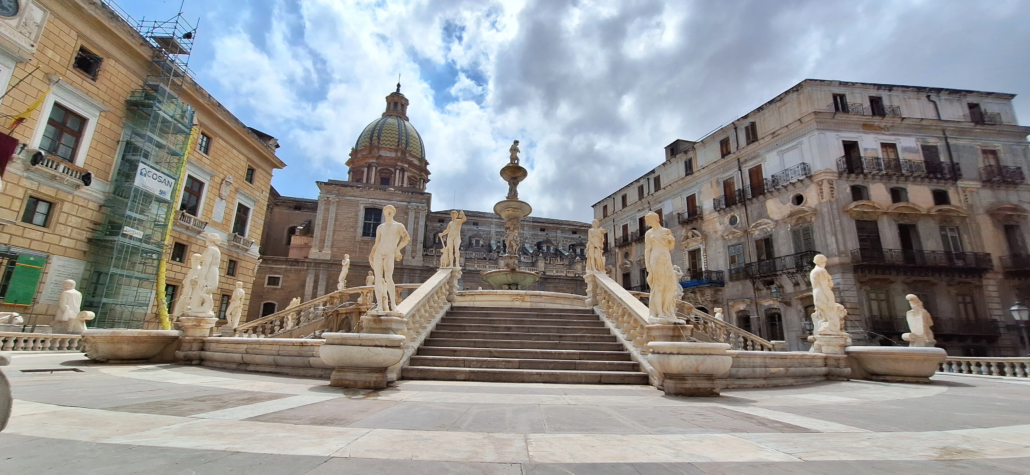
The fountain is one of the finest 16th century monuments in Palermo. The tuscan architects Camilliani and Naccherini designed the fountain. The local people called it the Fountain of Shame because most of the statues depict naked male and female bodies.
Bolsenatravel.com is your guide to Sicily
Church of San Cataldo
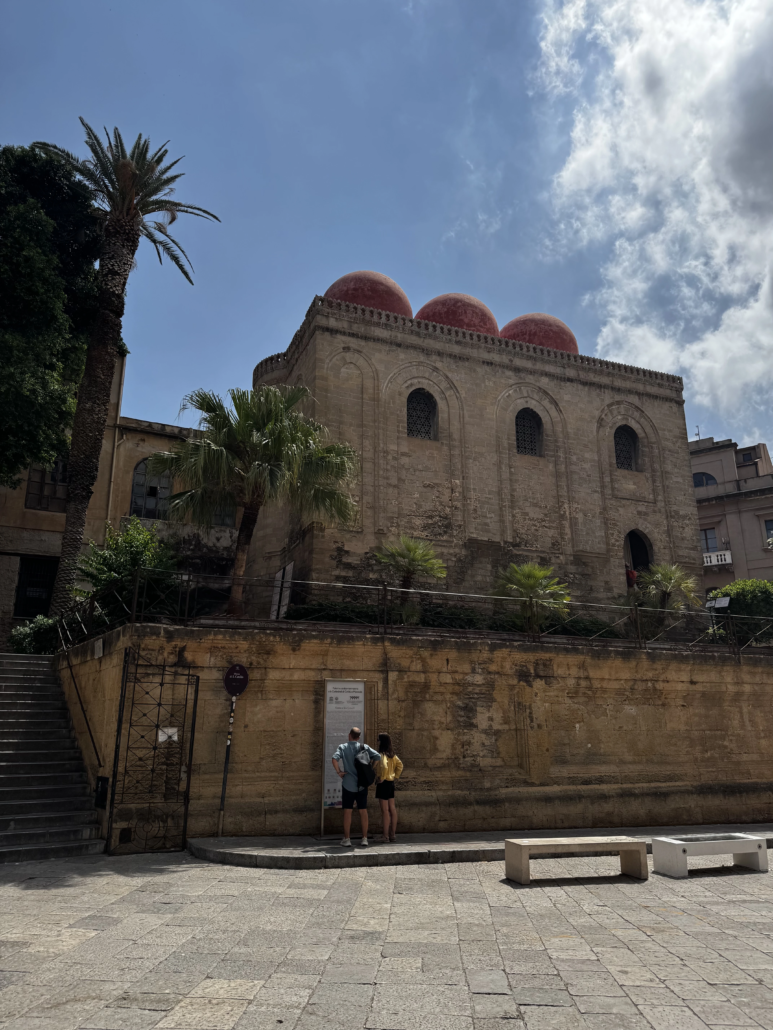
We continue our walk, and on the left side, we spot a church with round, vivid red cupolas: the Church of San Cataldo. It stands in the beautiful Piazza Bellini near the Church of Santa Maria dell’Ammiraglio.
Majone of Bari, Grand Admiral and Grand. Chancellor to King William Ist built the Church of San Cataldo as a private chapel around 1154. The interior of the church is typical for medieval Sicilian constructions: rectangular and unadorned.
The three hemispherical cupolas standing on a tall cylindrical drum with windows cover the exterior of the Church.
Kings of Malta preside the church nowadays. You can visit the church only in the presence of the keeper.
Church of Santa Maria dell’Ammiraglio
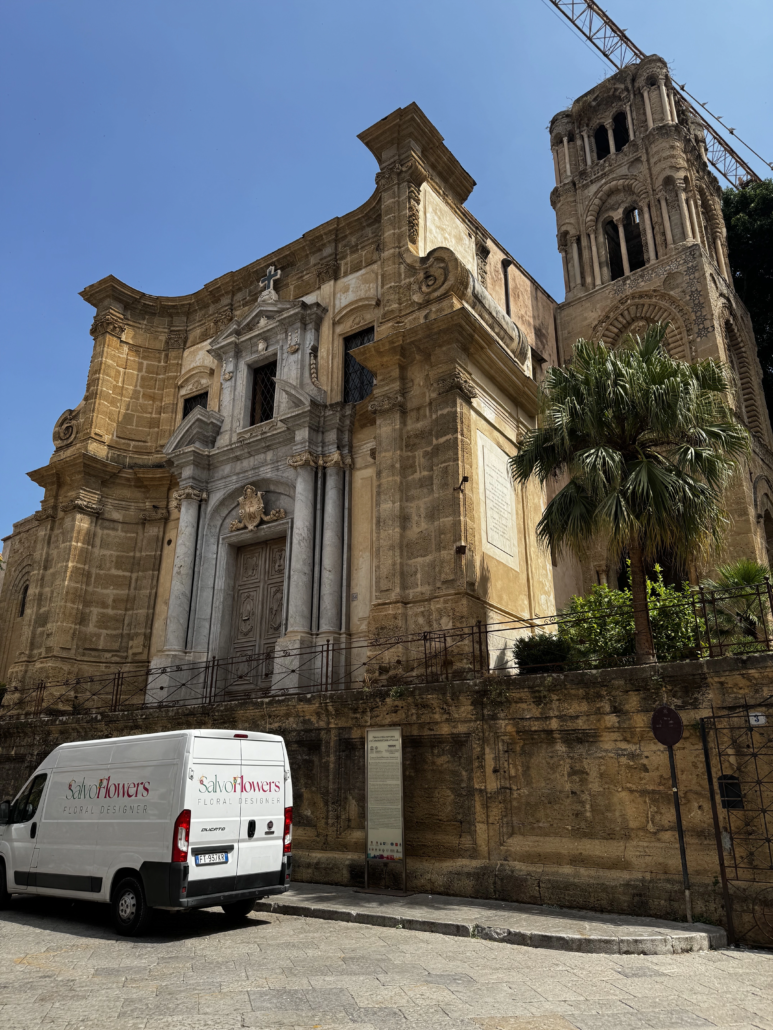
This church, Palermo’s Greek Orthodox Cathedral known as Martorana, combines deutero-Byzantine and Baroque styles. George of Antioch, Grand Admiral to King Roger II, built it as a private church around 1143. He originally designed the building as a central-plan church, a typical Byzantine style.
Starting in 1588, builders made major alterations to the church. Artists decorated the interior with beautiful mosaics. Today, we can admire some of the original works: Jesus and Four Angels in the cupola, the Annunciation in the triumphal arch, the four Evangelists in the vault, the Nativity of Christ, and the Formation of the Virgin.
In the lateral apses you can admire the figures of St. Joachim and St. Anne in mosaics dating from the first half of the 12th century.
The Cathedral
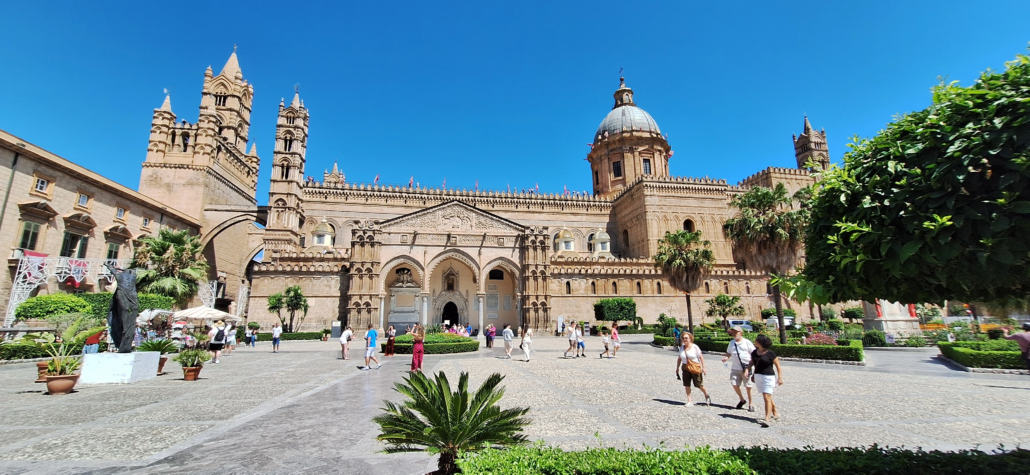
As we continue our walk, on the right side we notice a monumental building with an amazing architecture: the Cathedral.
Bishop Gualtiero ordered the construction of the Cathedral between 1170-1172 on the place of the old medieval Cathedral.
The builders dedicated the Cathedral to Our Lady of the Assumption. The Cathedral hosted the coronation ceremonies of the Hauteville and Hohenstaufen sovereigns. In the 14th century, craftsmen decorated the west front of the Cathedral. In 1426, Antonio Gambara created the elegant south entrance portal. Later, builders added the triple-arched portico facing the Cathedral Square.
In 1432, Francesco Miranda de Castellammare crafted the Cathedral’s wooden door with carved figures. In the 15th century, builders added many chapels along the sides of the aisles.
The famous marble sculpture Retablo by Gagini dating in the 16th century decorates the central apse. The architect Ferdinando Fuga of Florence renovated the church interior between 1781- 1801 in a mixed style of baroque and neoclassical. He added the great dome that changed the external medieval aspect of the Cathedral.
The royal tombs of the Hauteville and Hohenstaufen Sovereigns are in the chapels to the left of the south entrance of the Cathedral. The splendid Queen Constance’s Crown is in the Cathedral Treasury. The Crown is a genuine Byzantine imperial Kamelaukion.
Palazzo dei Normanni
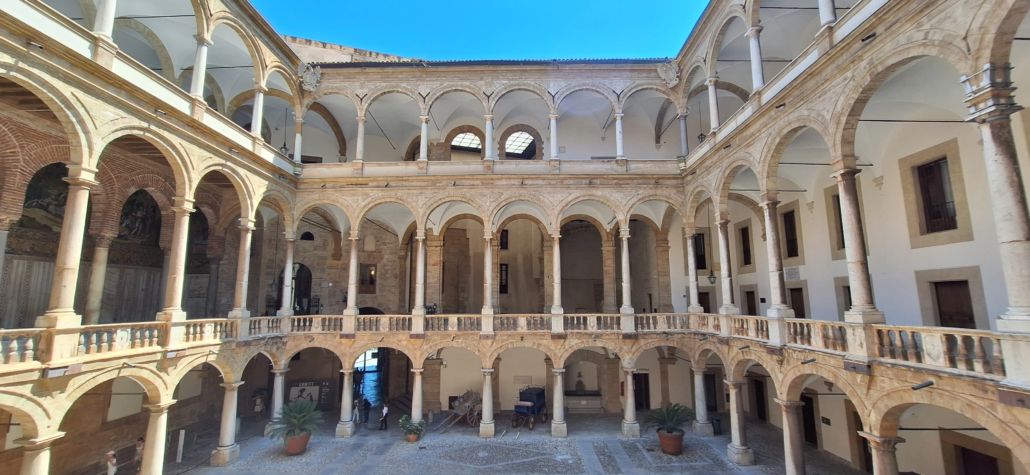
Palazzo dei Normanni is a famous historical palace of Palermo and one of the most important in Italy. The palace was the seat of the kings and viceroys of the Kingdom of Sicily. Nowadays the palace houses the Sicilian Regional Assembly.
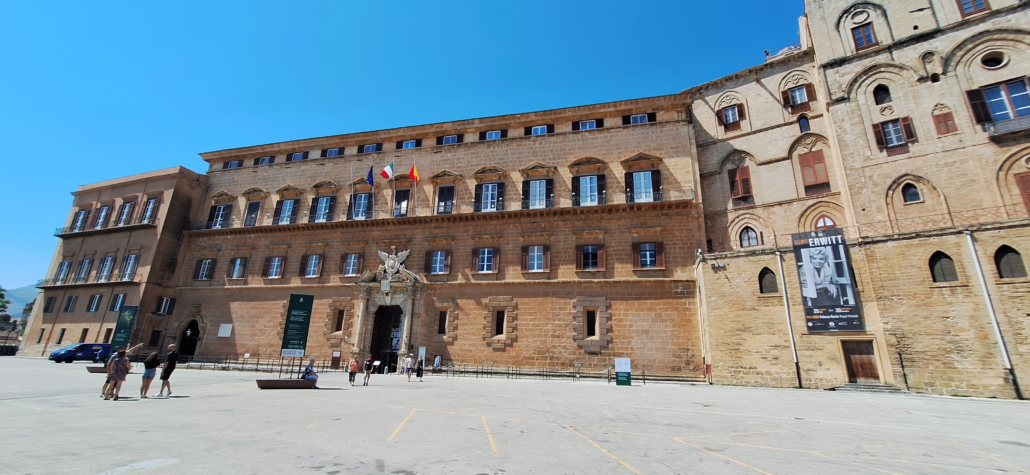
The construction of the Royal Palace begun around 1130, the year of the coronation of Roger II of Hauteville as first King of Sicily.
Between the 15th century and early 16th century, neglect caused the Royal Palace to fall into decay. From 1513 to 1553, the Inquisition occupied the palace. In 1553, after extensive renovations, the viceroys made the Palace their residence. In 1787, builders added new rooms to the palace: the Red, Yellow, and Green rooms.
King Ferdinand of Bourbon ordered the building of an Observatory on the Pisano Tower. From this Observatory, Giuseppe Piazzi discovered the asteroid named Cerere Ferdinandea after the King.
Between 1811-1812 the painter Giuseppe Velasco decorated the ancient Hall of Parliament with frescoes showing the labours of Hercules. For this reason, the Hall’s name is the Hall of Hercules.
The Sicilian Regional Assembly meets nowadays in the Hall of Hercules. Palazzo dei Normanni houses an architectural masterpiece: Palatine Chapel, that we can visit when we buy the ticket to visit the palace.
Bolsenatravel.com is your guide to Sicily
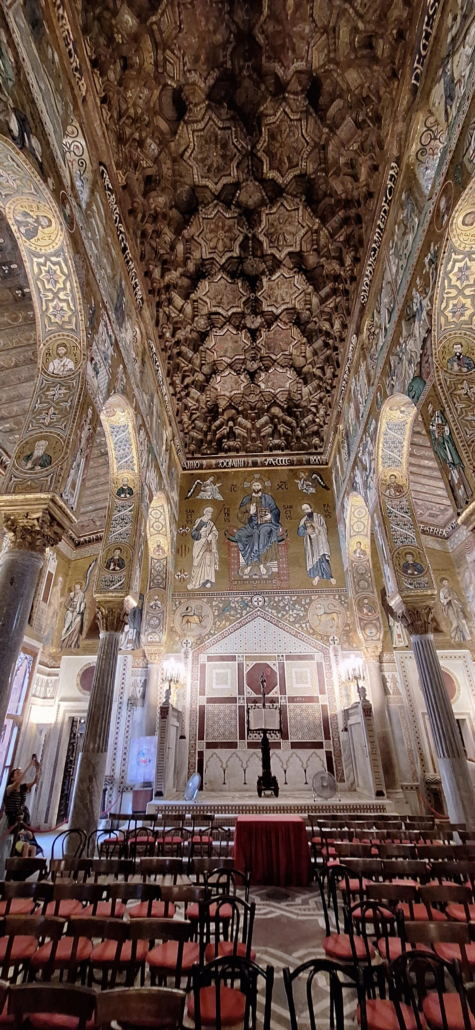
Palatine Chapel
Palatine Chapel, an architectural jewelry built in 1132 in Sicilian mixed plan, has a nave and two aisles divided by rows of columns with arches. The inauguration of the Chapel took place in 1140.
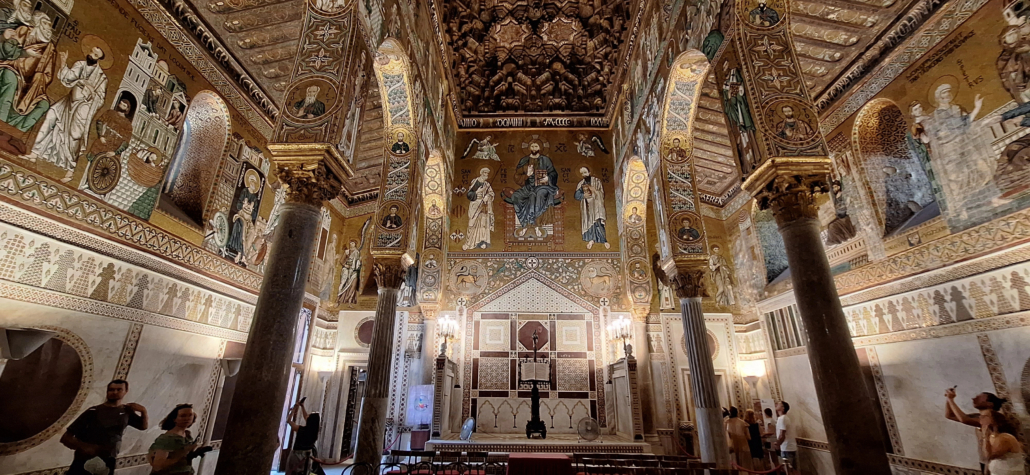
A beautiful stalactite wooden ceiling covers the nave of the Chapel. The Byzantine Sanctuary has three apses.
A hemispheric dome that is resting on angular niches covers the central area of the Chapel . The great marble royal throne stands at the beginning of the nave. Above the Royal throne is a 14th century mosaic depicting Christ enthroned. Near the presbytery we can see a precious ambo on columns and a beautiful candlestick, 4,5 m high, decorated with plants and inlaid figures, dating from 12th century.
In 1143, Byzantine artists and local craftsmen decorated the upper walls of the Palatine Chapel’s presbytery and apse with beautiful mosaics on a gilded background. Over the next 20 years, they adorned the nave as well.
The cupola of the Chapel features Christ Pantocrator giving his blessing. The drum depicts the four Prophets: David, Solomon, Zacharias and Saint John the Baptist. The arches of the presbytery depict the Annunciation and the Presentation to the Temple.
The right side of the Chapel presents scenes from the life of Christ. Later mosaics depicting scenes from the Old Testament decorate the nave. The aisles depict stories of Saint Paul and Saint Peter.
We will continue our tour of the monuments in Palermo very soon. Follow our blog for more!


Leave a Reply
Want to join the discussion?Feel free to contribute!