
Civita di Bagnoregio – La città che muore
Civita di Bagnoregio – La città che muore/ the dying town is a magical place that you can admire from far away but you can accede only by foot, on the bridge that crosses the valley of the calanques to the entrance gate.
The calanques are hills of white clay without any vegetation, that suffer continuous erosion due to the two rivers that pass by and to the atmosferic conditions.
Civita di Bagnoregio is a masterpiece of history and art, secluded from the world by the clay valley below in continuous erosion.
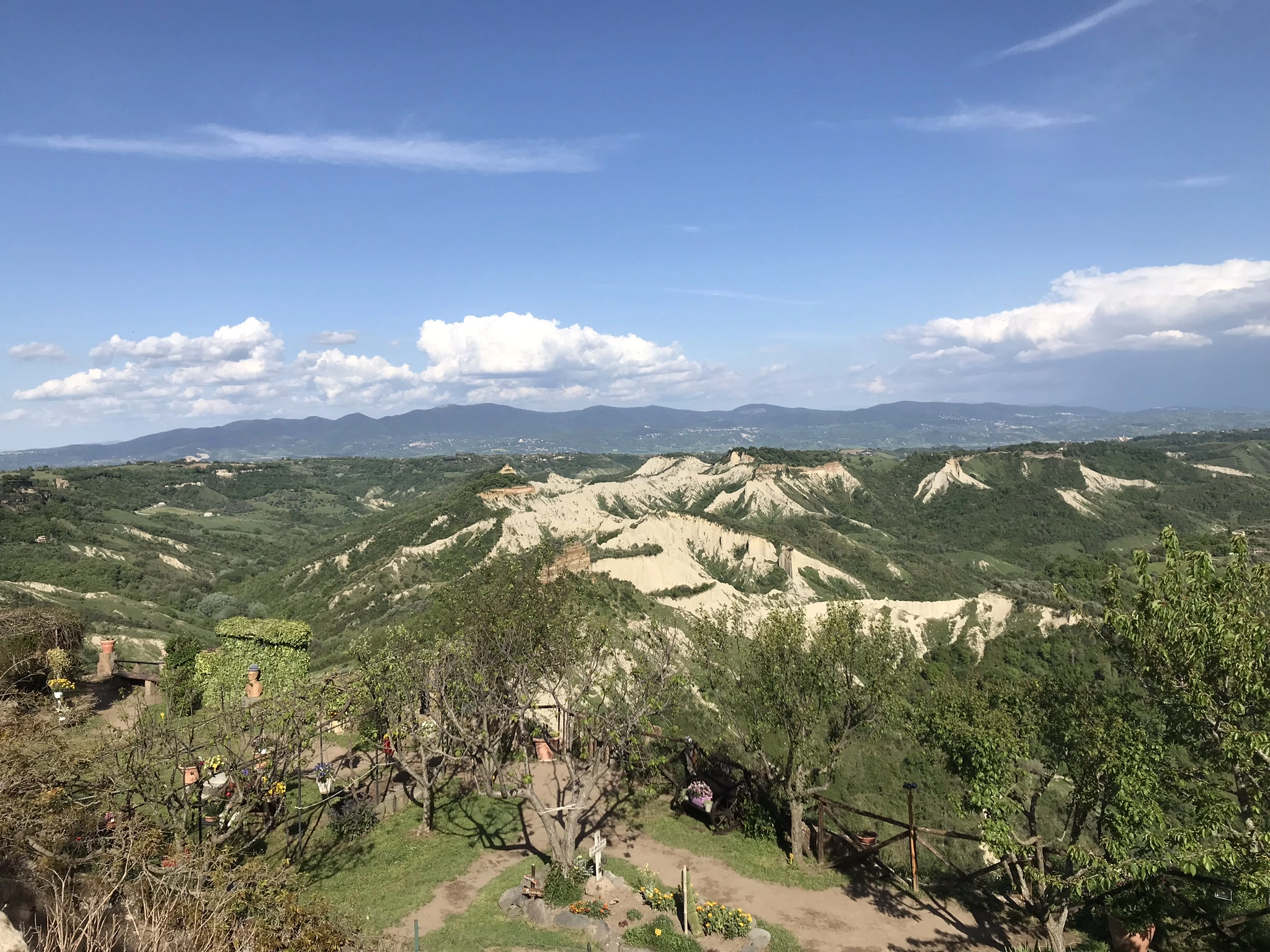
Students from art and history universities across Italy visit Civita to study the hidden gems of this amazing town.
Civita di Bagnoregio is collapsing bit by bit into the void of the calanques valley below since hundreds of years.
You should hurry to admire this jewelry as is still standing and alluring us with its unique beauty and mystery!
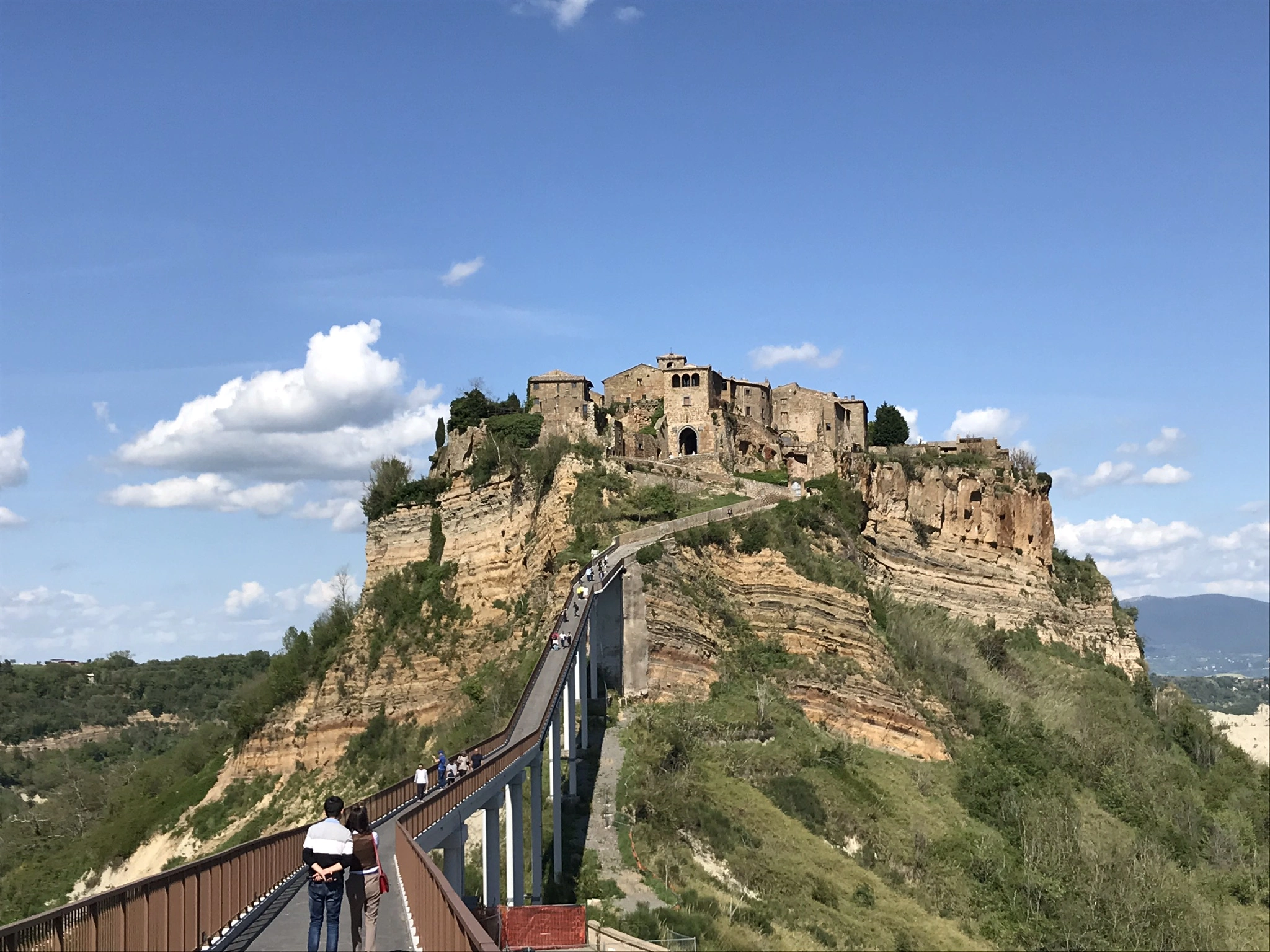
Civita di Bagnoregio has Etruscan origins
The Etruscans found Civita di Bagnoregio 2500 ago. The Etruscan settlement had defensive walls with five gateways. Only one gateway remained till today: Porta di Santa Maria decorated with Etruscan-Roman symbols.
The original Etruscan gate still exists and is one meter away from the facade. When you enter you can notice the Etruscan arches above and the original walls built using the opus quadratum technique. This ancient technique was using large blocks of stone placed one on top of the other without cement. They are standing due to their own weight.
From Porta di Santa Maria we follow a street that is an ancient decumanus. Both the Etruscans and the Romans had precise rituals when they were founding a city. They chose the site of the city and drew the perimeter along with two perpendicular roads forming a cross. The perpendicular roads were: the cardo in north-south direction and the decumano from east to west. The point where the two roads intersected was the sacred centre of the city. In the sacred centre were the public buildings and the businesses were made. The sacred centre of Civita is in Piazza San Donato.
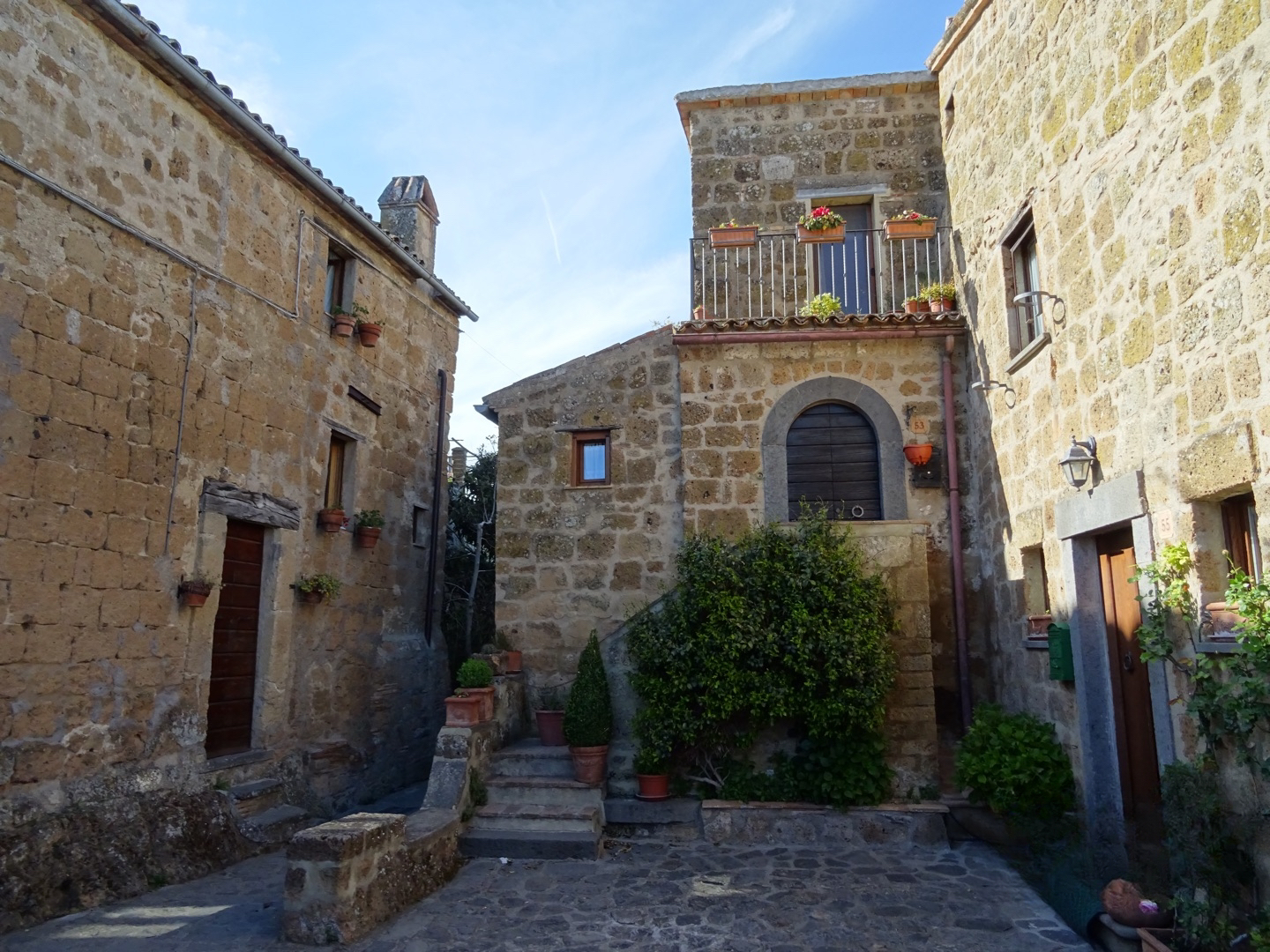
Piazza Colesanti
The ancient decumanus takes us to Piazza Colesanti. Here we can admire the residence of Colesanti Family, one of the oldest and most important families in Civita. The residence has crumbled on several occasions and now some of the windows look over the void space in the valley of the calanques.
As we walk along the decumanus, we reach the main square of the town: Piazza San Donato.
Piazza San Donato
În Piazza San Donato, on the right side, we can visit the most interesting Geological and Landslide Museum inside the noble Alemanni residence. On the left side we can admire the building of the Town Hall established here in 1448. The Town Hall was transferred to Bagnoregio after the terrible earthquake in 1695. On the opposite side of the piazza we can admire the Church of Saint Donato, formerly cathedral, now a simple parish church. The Bishop’s seat was transferred to Bagnoregio. The Church was built in Romanesque style and was rebuilt in 1500. The tympanum is decorated with a ceramic image of Saint Donato.

When you enter the church, on the right side, you can see a small marble urn with a painting of Saint Victoria. Saint Victoria was martyred in 251 by the Romans under Emperor Decius.


